Celebrating 75 Years of Bvlgari Serpenti

This week, I was invited by BVLGARI to celebrate the history and evolution of the Maison’s icon, Serpenti at Zurich’s Mascotte Club. Continually changing its skin through the creativity and vision of the master Roman jeweler, Serpenti has unfolded its transformative nature over the past 75 years. Always ready to take a hypnotic new form, the icon forever remains an emblem of eternal rebirth and bold metamorphosis.

Introduced in 1948 as jewelry-watches to be wrapped around the wrist, Serpenti creations made their debut with a supple, stylized body crafted with the iconic Tubogas technique. In the ’50s, the Bulgari serpent began to embrace a more realistic style, an evolution that culminated in the ’60s when its distinct turned into a canvas for creative experimentation sporting gemstones and colored enamels. Moving from one mesmerizing form to the next, Serpenti has offered stunning interpretations of its hexagonal scale motif, various levels of preciousness and unique combinations of exquisite gems, captivating design and creative craftsmanship.

Photo top right: Kristina Bazan and Photo bottom right: Christa Rigozzi

From left to right: Alex Lambrechts, Nicole Boghossian, Zoë Pastelle, my humble self, Kevin Lütolf and Jaz Brunner.

In the last 75 years, women have affirmed the right to be independent, cultivate their talents, pursue their dreams and live a life that aligns with their desires. From the red carpet to the office, Serpenti has been their faithful ally, evolving side by side with confident women proud to reveal their magnetic charm.

With Monica Brannetti who had flown in for the night from Rome.

We started the evening with a very interesting conversation between Christa Rigozzi, who lead through the evening, and Monica Brannetti from the Bvlgari Heritage Team about the amazing stories that have been told in the past decades through Serpenti jewelry and watch pieces.

The amazing Dora Live Band performed on stage and made sure that nobody stood still in the room. The final culmination of the night was the big birthday cake, followed by the sounds of DJ Tanja La Croix.

LoL, Sandra

Photos: © Sandra Bauknecht / David Biedert Photography, Bvlgari, Jaz Brunner
DISCLOSURE: We may earn commission from links on this page, but I only recommend products I love. Promise!

Mary Quant Dies at Age 93

Mary Quant (Feb 11, 1930 – April 13, 2023), one of the most influential figures in the fashion scene, died at age 93 peacefully at home in Surrey, UK. Being credited with making fashion accessible to the masses with her sleek, streamlined and vibrant designs, she is also known as the pioneer of the mini skirt and hot pants. While this claim has been challenged by others, it became the trademark of her style, and she is cited as the inventor of this style. However, Mary Quant liberated more than just our legs. Her real legacy was more profound, and her vision of female freedom still feels as fresh as it did back in 1955.

Dame Mary was the daughter of two Welsh teachers but was born in Blackheath, London, in 1930. She gained a diploma in the 1950s in art education at Goldsmiths College, where she met her husband Alexander Plunket Greene, who later helped establish her brand and with whom she married until his death in 1990. The couple had a son, Orlando, who was born in 1970. In 2014, she was made a dame for services to British fashion in the Queen’s New Year Honours list.

The V&A Museum, which hosted an exhibition about Dame Mary’s designs in 2020, wrote: «It’s impossible to overstate Quant’s contribution to fashion. She represented the joyful freedom of 1960s fashion, and provided a new role model for young women. Fashion today owes so much to her trailblazing vision

Quant initially sold clothing sourced from wholesalers in her new boutique in the Kings Road named Bazaar, that she had opened in 1955. Being the first concept store in the world, she created a special environment, including music, drinks, and long hours that appealed to young adults. A groundbreaking service at that time – this environment was unique for the industry, as it differentiated from the stale department stores and inaccessible high-end designer store environments that had a hold of the fashion market.

The bolder and more unique pieces in her collection started garnering more attention from media like Harper’s Bazaar, and an American manufacturer purchased some of her dress designs. Because of this attention and her personal love for these bolder styles, she decided to take designs into her own hands. Initially working solo, she was soon employing a handful of machinists; by 1966 she was working with a total of 18 manufacturers. A self-taught designer inspired by the culture-forward «Chelsea Set» of artists and socialites, Quant’s designs were riskier and more unique than standard styles of the time.

Dame Mary named the mini skirt after her favourite make of car, recalled its «feeling of freedom and liberation» . She said: «It was the girls on King’s Road who invented the mini. I was making clothes which would let you run and dance and we would make them the length the customer wanted. I wore them very short and the customers would say, ‘shorter, shorter’.»

In 1988, Quant designed the interior of the Mini (1000) Designer (originally dubbed the Mini Quant, the name was changed when popularity charts were set against having Quant’s name on the car). It featured black-and-white striped seats with red trimming.

Quant’s designs revolutionized fashion from the utilitarian wartime standard of the late 1940s to the energy of the 1950s and 1960s’ cultural shifts. Modern fashion owes a great deal to the trailblazing 1960s designer Mary Quant. She stocked her own original items in an array of colours and patterns. From skinny-rib sweaters, to coloured tights and ‘onesies‘, you will be amazed that Dame Mary also revolutionized the high street with trousers for women, as well as accessories, tights and make-up, while using the daisy brand design that became synonymous with her creations. Quant looks changed the way we dress, proving there was more to Mary than just miniskirts.

Here are some things that you might not know about that are credited to Mary Quant:

THE JERSEY DRESS

Quant saw the potential for easy jersey garments as outerwear in the ’60s. Leading then the jersey dress boom by producing thousands of designs in hundreds of different colors, including different shaped collars, sleeves, zips and buttons, with skirts swishy or straight, the jersey dress became a driving force in the democratization of style.

TIGHTS

Where would the modern women be without stretchy tights, in black, or a choice of colours? Sixty years ago, most women were still unquestionably wearing stockings in the shade «American Tan» (black stockings were a hangover from the Victorian era). Held up by garters, or attached to a separate suspender belt with hard metal clips, stockings were fiddly and uncomfortable to wear. Skirts meanwhile fell below the knee to keep all this hardware, and naked thighs, firmly hidden from view. Mary Quant, always looking to develop new ideas, wanted stockings and tights in bright colors, such as mustard yellow, ginger and prune, as well as black – the perfect accompaniment to her knee-skimming skirts and dresses which enabled women to dance, run and move. She partnered with the Nylon Hosiery Company, set up in 1954 by the Curry family, who had recently emigrated from India. They developed a technique of making long stockings which joined together at the top, and were specially dyed to contrast and co-ordinate with Mary Quant separates. The partnership proved to be long-lived, with an ever-expanding range of new colours and patterned knits, including the 1966 «Highball» glitter stockings in silver, gold, green, blue and red.

TROUSERS FOR WOMEN

From skinny jeans and culottes to harem pants, bell bottoms and power suits, trousers have been an essential part of fashionable women’s wardrobes for over 50 years. This was thanks largely to Mary Quant, who was one of the first designers to promote trousers and suits as fashionable womenswear. When Quant opened her famous boutique, Bazaar, trousers and jeans were popular with female students and subcultures on the outskirts of mainstream fashion. Appropriating trousers for women remained a strong theme throughout Quant’s career, as she pushed towards an increasingly androgynous look, playfully challenging established gender norms.

THE SKINNY-RIBBED SWEATER

As with many of Quant’s designs, the inspiration for the skinny-rib came from childrenswear. In her 1966 autobiography, she describes how she «pulled on an eight year old boy’s sweater for fun» and was «enchanted» with the result. Six months later, Quant had put the skinny-rib into production and «all the birds were wearing the skinny ribs». Pinafores paired with sweaters were the building blocks of Mary Quant’s Ginger Group – the wholesale label she set up in 1963, which promoted good-value, mix-and-match separates.

PVC RAINWEAR

In the 1960s, Quant was «bewitched» by polyvinyl chloride (PVC), «this super shiny man-made stuff and its shrieking colours… its gleaming liquorice black, white and ginger.» (Quant by Quant, 1966). The plastic-coated cotton was a new material in the fashion world, having previously only been used for protective garments. Quant launched her «Wet Collection» in April 1963 at the Hôtel de Crillon, Paris, featuring entirely PVC garments. The show was attended by influential fashion editors, and it earned the designer her first magazine cover for British Vogue, featuring a brilliant-red PVC rain mac.

LOUNGEWEAR AND HOT PANTS

Writing in 2012, Quant recalled how she discovered the «house-wear» market in the US around 1965 and decided to bring this new concept to Europe. She designed «a collection of jersey tops and hotpants in striped jersey-knit fabrics with matching bras, pants, socks, leg warmers and minis – all using knitted fabrics of various thicknesses and weights». The idea of special clothes for lounging in at home was quite a change in mindset for most of the British public – who only had the ubiquitous dressing gown until then. The range included brightly coloured jersey and stretch towelling one-piece suits, with short zip-up versions and full-length styles that included feet. These easy-to-wear garments were the ultimate in comfort and freedom, made in the fun colours that were at the heart of Quant’s brand. Quant’s experiments with loungewear can be seen as the forerunner to the contemporary «onesie» craze.

WATERPROOF MASCARA

Quant also made her mark on the makeup world. Her cosmetics line, with its daisy logo and colorful crayon formulations, shared the same sunny, childlike outlook as her fashion. And she brought the world a truly innovative invention: waterproof mascara.

BOB HAIRCUT

Mary Quant made London swing in the early 1960s. But her look was completed by the liberating geometric haircuts of Vidal Sassoon. In 1964, Vidal Sassoon provided Mary Quant, then 34, with her signature haircut, that is now as closely associated with Quant as Sasson. The Bob is the most trending hairstyle at the moment again.

One of the most important figures in fashion, Quant’s influence can still be seen on catwalks. Rest in Peace, Mary, thank you!

LoL, Sandra

Photos: © Mary Quant, V&A, AP
DISCLOSURE: We may earn commission from links on this page, but I only recommend products I love. Promise!
New Location for CHANEL in Saint-Tropez

CHANEL is returning, as it does every year, to Saint-Tropez to celebrate the summer. For one season, the House is leaving La Mistralée townhouse and settling in the heart of the village. Built on a little town square with typical Provençal charm, a large 340m2 ochre stone residence with blue shutters has been transformed into an elegant boutique hosting the ready-to-wear and accessories collections by Virginie Viard, a selection of jewellery and watches, as well as a range of perfumes.

As if entering a holiday home, clients are welcomed into a shady garden with an outdoor salon surrounded by Mediterranean species. The boutique opens onto a vast vestibule decorated with a stained-glass window – a reference to the stained-glass of the Aubazine abbey where Gabrielle Chanel spent part of her childhood.
The ground floor then unfolds around a single large room punctuated with black columns contrasting with a terracotta floor and white walls set with panels of beige zellij or quilted-effect fabric. A minimalist two- tone architecture where warm spaces are created by sets of furniture, such as the curved lamps and the light-coloured rugs hemmed in black.

This spacious salon presents the S/S 2023 ready-to-wear collection and pre-collection, to be joined in the coming weeks by the CHANEL – Dakar 2023 Métiers d’art collection. Styled on mannequins, the looks are also shown in understated dressing rooms made of stretched woven fabric textured like white tweed. Accessories, small leather goods and costume jewellery mingle with books and decorative objects in large bookcases. Les Eaux de CHANEL fragrance collection also occupies these shelves, like a row of invitations to visit Deauville, Biarritz, Paris, Venice, Edinburgh and of course, the landscapes of the Riviera. The ground floor is also home to two other spaces. The first one is devoted to bags, including the iconic 2.55 and 11.12 bags, along with seasonal creations and new versions of the CHANEL 22 bag. The second one is dedicated to summer with swimwear and beach accessories, sunglasses and from May onwards, a preview of the CHANEL COCO BEACH collection.

Upstairs, the decor combines modern furniture with elements inspired by Gabrielle Chanel’s own apartment: a wheatsheaf table and decorative objects in bronze and rock crystal by Goossens, screens and mirrors. A second stained-glass window softens the sunlight while a space like a contemporary boudoir is home to the Watches and Fine Jewelry, notably the COCO CRUSH and N°5 collections, and the J12, Première and BOY·FRIEND watches. Pale fabric sofas for visitors to try on the season’s shoes, nestle by dressing rooms presenting further ready-to-wear silhouettes. Three large fitting rooms complete this welcoming holiday home, steeped in the art de vivre of the French Riviera.

The CHANEL seasonal boutique in Saint-Tropez will open its doors from 8th April until October.
CHANEL Boutique
78, boulevard Louis Blanc 83990 Saint-Tropez France +33 4 94 49 07 47
Opening hours:
Monday to Sunday 10am to 1pm and 2 to 9pm

LoL, Sandra

Photos: © CHANEL
DISCLOSURE: We may earn commission from links on this page, but I only recommend products I love. Promise!

Alaïa’s Cabaret Sandals

Sometimes, a fabulous pair of heels deserve its own post. This kind of footwear has the power to elevate a simple outfit into something conversation-worthy. Inspired by Parisian cabaret dancers, Alaïa’s sandals are crafted from patent-leather in a barely-there design. The drama is revealed when you’re sitting cross-legged or walking up stairs – all eyes will be on the cheeky gold figurines that form the heel. I am completely obsessed.

TO SHOP THE ALAÏA CABARET SANDALS, CLICK HERE PLEASE.

LoL, Sandra

Photos: © Alaïa / Sandra Bauknecht
DISCLOSURE: We may earn commission from links on this page, but I only recommend products I love. Promise!

Aveda’s New Bond-Building Styling Cream

You will thank me once you have tried this new amazing AVEDA product. The vegan botanical repair™ bond-building styling cream combines sleek styling with hair bonding. It is a multi-benefit styling hair cream that nourishes hair while the silicone-free hair bond builder also protects hair from thermal damage up to 450 degrees, shielding from future breakage and damage caused by styling.

Create new bonds by the thousands, strengthen hair’s cortex, prevent and protect from damage with these plant-derived components:

• Bond-building plant molecule – Build new hydrogen bonds deep in hair’s cortex to strengthen and reinforce hair’s integrity at the core.
• Nourishing macro green blend – Replenish the essentials of healthy-looking hair with certified organic avocado, green tea and sacha inchi oils. Smooth the cuticle to detangle. Help prevent breakage.
• Plant-based complex – Create an invisible botanical outer layer to protect hair from future damage.

Featuring Aveda’s own Pure-Fume™ aroma with certified organic ylang ylang, rose and marjoram essential oils, it is a great addition to the botanical repair™ family.

LoL, Sandra

Photos: © Aveda / Sandra Bauknecht
@avedaswitzerland #veganhaircare #avedarepairinstyle

DISCLOSURE: We may earn commission from links on this page, but I only recommend products I love. Promise!

Tom Ford Soleil de Feu

«Soleil de Feu is a smoldering amber woody scent evoking sunset light. It is the most sensual expression of soleil.» – Tom Ford

Tom Ford launches Soleil De Feu as the latest addition to the Private Blend collection . It joins the family of sun-inspired fragrances, that includeSoleil Blanc (2016), Soleil Neige (2019), and Soleil Brûlant (2021).

Soleil de Feu is an amber woody scent that evokes the molten sun descending in a burnished blaze over the sea, painting the sky with fiery strokes of bronze solar light. This is the most sensual expression of the Soleil perfume. Notes of sandalwood are enhanced with tuberose and warm ambers, resulting in a seductive and sensual fragrance. Personally speaking this scent could have been crafted specifically for me. It has all some of my favorite notes with a beautiful oriental touch.

Available as Eu de Parfums 30ml, 50ml, and 250ml Decanter.
TO SHOP SOLEIL DE FEU ONLINE, CLICK HERE PLEASE.

LoL, Sandra

Photos: © Tom Ford / Sandra Bauknecht
DISCLOSURE: We may earn commission from links on this page, but I only recommend products I love. Promise!

My Look: Unboxing Valentino

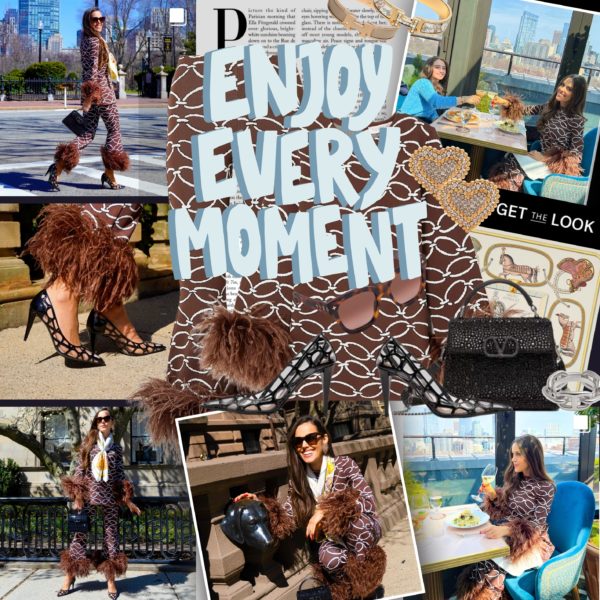
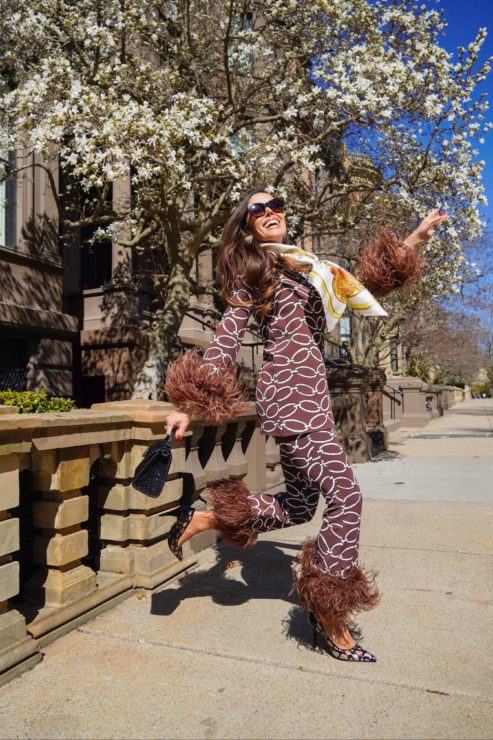
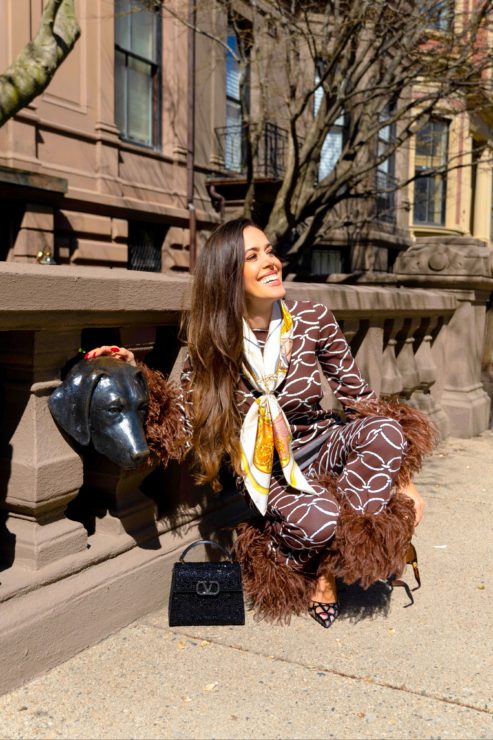
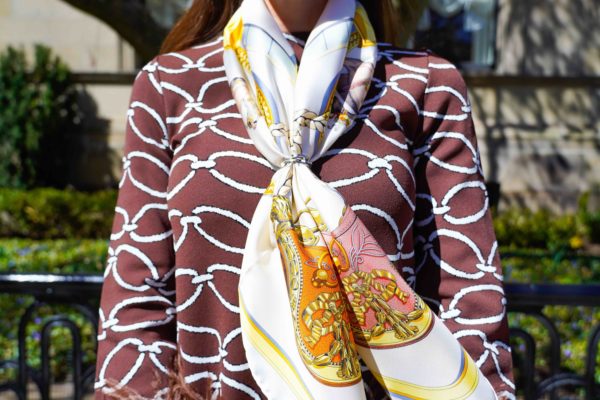
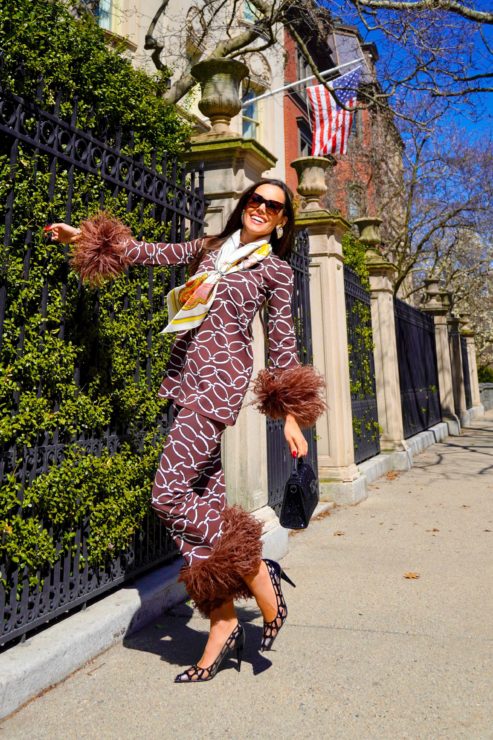
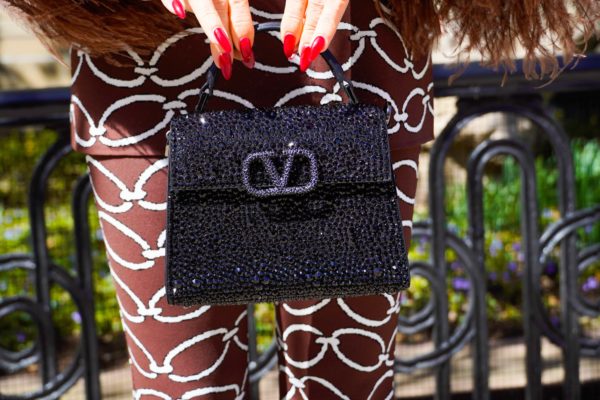
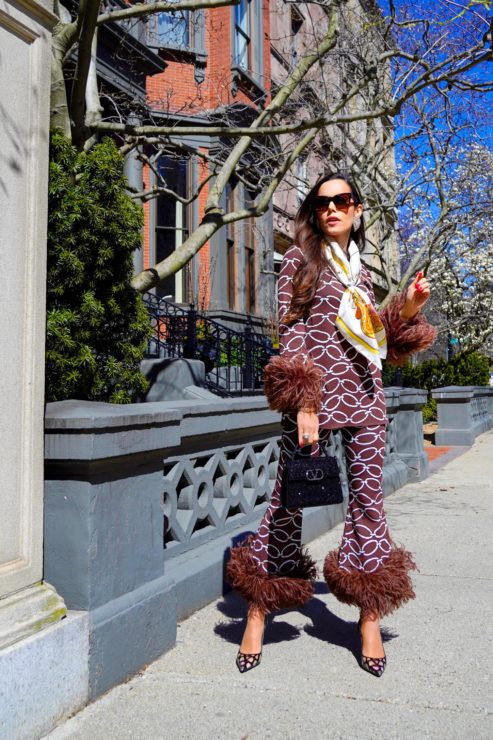
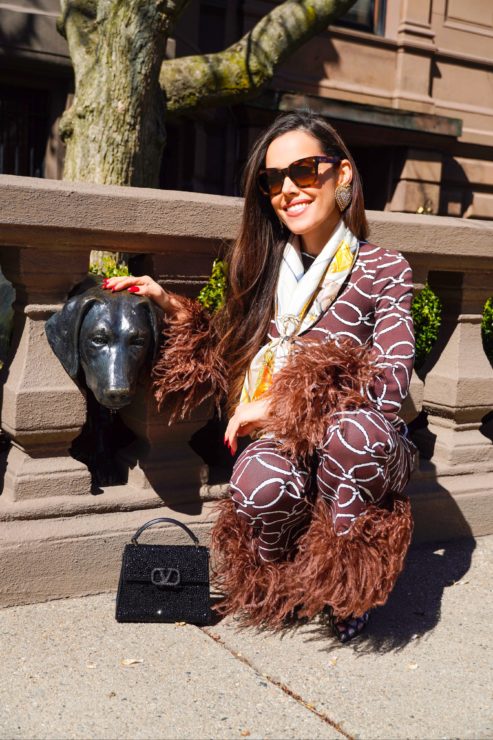
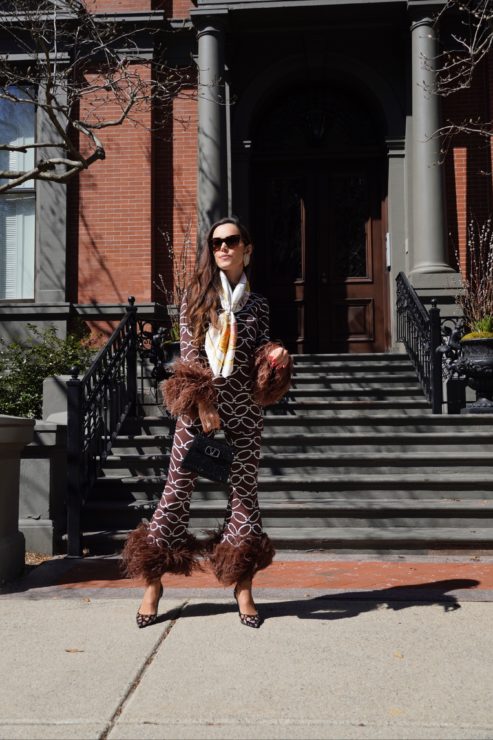
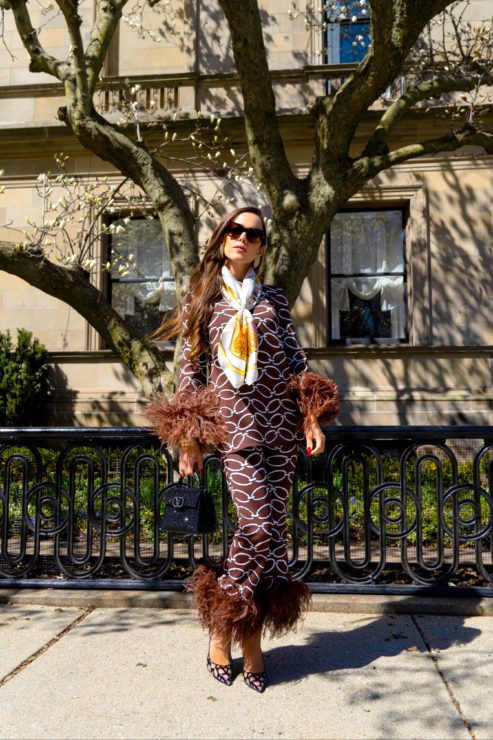
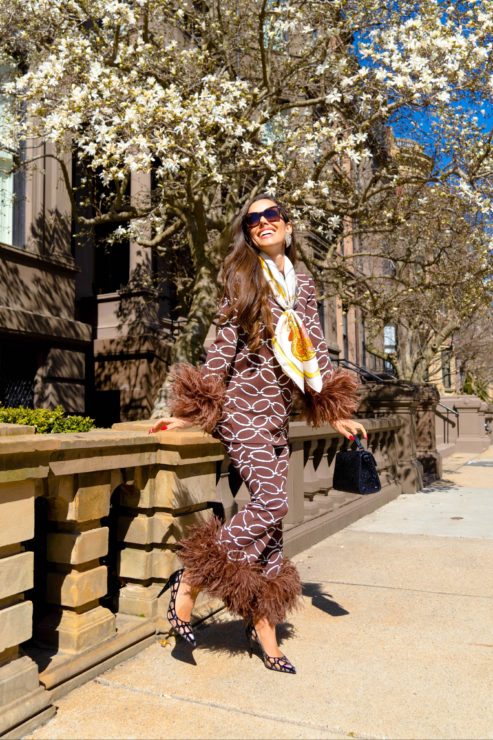
As promised, here is the detailed outfit post of my beautiful look that I wore to the Unboxing Valentino event. Sporting the Toile Iconographe pattern head to toe, a visual attestation to the Valentino identity, it transforms into a monochrome look. I paired it with one of my favorite pieces of the collection, the oversized feather embellished blazer, for a true style statement.

My look: Feather-detail double-breasted blazerToile Iconographe V-Logo jersey bodysuiticon, Toile Iconographe silk-faille midi skirticon, logo-print tights, Locò small V-Logo Toile Iconographe shoulder bagicon, Le Troisième Toile Iconographe micro tote, V-Logo crystal-embellished hoop earringsicon, crystal logo ring, V-Uno V-Logo oversized square acetate sunglassesicon, and Toile Iconographe pump in polymer and patent material, all by Valentino.

LoL, Sandra


Photos: © Rian Davidson 
DISCLOSURE: Paid collaboration with Valentino. #PartnershipwithValentino #SuppliedbyValentino
We may earn commission from links on this page, but I only recommend products I love. Promise.

Excalibur Blacklight Spin-Stone™ MB

The skeleton calibres manufactured by Roger Dubuis in Geneva are the essence of the expressive singularity of the Excalibur collection. Complying with one of the most respected certifications of Haute Horlogerie, the Poinçon de Genève, the Excalibur watches are designed like contemporary works of art. Every single component being finished by hand, the watches are symbols of passion. The work of hyper-skilled craftsmen is at the forefront of each watch with a direct view on the creative mechanics making these pieces more alive than ever.

Roger Dubuis’s fully integrated Manufacture is the birthplace of ground-breaking innovations, among them the uniquely shaped spinels named Spin-Stones™. Graded from red to blue and coated with SuperLumiNova, the stunning gems always shine in colour – by day, night, or under UV light-, and give birth to the Excalibur Blacklight Spin-stone™ Monobalencier edition, presented at Watches & Wonders , while taking colourful luminescence to new heights.

EON GOLD 18K, Self-winding, 42mm
Available for $162.000, limited to 28 pieces.

LoL, Sandra

Photos: © Roger Dubuis
DISCLOSURE: We may earn commission from links on this page, but I only recommend products I love. Promise!

PIAGET High Jewelry Cuff Watches

Presented at Watches & Wonders, these three strikingly contemporary PIAGET watches re-interpret the cuff watches of the 1960s-70s that became a hallmark of the Maison’s audacity and pioneering fashion-focused creativity. The organic design, innovative and unexpected, references the free-form, hyper-naturalism of 1960s and ‘70s jewelry, with the signature oval dial half-hidden by the gold work of the bracelet that appears to grow over the case and ornamental dial, emphasizing the naturalistic theme.

Each cuff is hand-engraved with different patterns and textures, highlighting Piaget’s expertise in the art of engraving and dedication to Métiers d’Or. The different styles of engraving demonstrate the combination of dexterity and artistic sensibility mastered by each individual artisan.

The gold is incised, by hand, one line at a time, using the sharp tip of a burin, the lines varying in depth, width and direction to obtain the desired effect. Gold shavings are gently blown away from the surface by the goldsmith after each gesture. No two patterns of engraved gold are the same.

The golden bracelet is streaked with diamonds emphasizing the linear fluidity of the engraving, and inset with a diamond-framed case and dial of white opal, its scintillating rainbow colors as if moving with the ebb and flow of the goldwork.

The rugged, bark-like texture of the second cuff contrasts with the classical oval dial of exquisite, intense, velvety Sleeping Beauty turquoise, framed by sapphires in color gradation.

The third cuff in white gold evokes a frosty landscape, patterned with delicate ice crystals that creep over a dramatic dial of black opal, flashing with green and blue lights, echoed in the frame of graduated emeralds.

I have always been a huge fan of cuff watches and find these models incredibly beautiful.

LoL, Sandra

Photos: © Piaget
DISCLOSURE: We may earn commission from links on this page, but I only recommend products I love. Promise!

Louis Vuitton Skin: The Architecture of Luxury

«None of Louis Vuitton’s stores are designed to fit into the urban context in any conventional way… They are buildings designed to have the same appeal as the Maison’s products, elevated to civic scale.» − Paul Goldberger

An extensive exploration of Louis Vuitton’s façades—called the «skin» in architectural parlance—by Pulitzer Prize-winning author Paul Goldberger, Louis Vuitton Skin: The Architecture of Luxury takes readers on an exhilarating world tour of the Maison’s most distinctive stores. From São Paulo to Seoul, Miami to Mexico City, the book visits Louis Vuitton locations that collectively form what Goldberger calls «the most radical rethinking of the concept of brand identity in our time.»

Avoiding consistency, the French luxury house effectively invested not in a single architectural identity but rather in the notion of architecture itself as being Louis Vuitton’s identity. To that effect, the Maison has commissioned significant buildings, many by internationally renowned architects—including Frank Gehry, Jun Aoki and Peter Marino — with bespoke exteriors designed to create a powerful visual experience, relating to the specificities of its location, and above all, evoke emotions. Unequivocally modern, yet upholding Louis Vuitton’s unparalleled tradition of quality craftmanship, each store’s skin is constructed to have the same appeal as the Louis Vuitton products within it.

Undercutting the expectation that a vast luxury company must assert itself behind standardized visual codes, the Louis Vuitton stores highlighted in this book are each dramatically different urbanistic and architectural expressions, all unlike anything the Maison has previously designed. At the Istanbul Istinye Park location, for example, the exterior resembles a topographical map made from a three-dimensional printer, whereas in Tokyo’s Namiki Dori store, the glass façade references the nearby Tokyo Bay, with undulating surfaces that transmit shifting colors for a wave-like effect.

The book will be available in six different covers, each featuring one of Louis Vuitton’s most architecturally distinctive stores around the world: Beijing, Paris, Seoul, New York City, Tokyo and Singapore.

Paul Goldberger, whom the Huffington Post has called “the leading figure in architecturecriticism,” is currently a contributing editor at Vanity Fair. From 1997 through 2011, he served as the architecture critic for The New Yorker. He also holds the Joseph Urban Chair in Design and Architecture at the New School in New York City, where he was formerly dean of the Parsons School of Design. He began his career at The New York Times, where in 1984 his architecture criticism was awarded the Pulitzer Prize for Distinguished Criticism, the highest award in American journalism. Goldberger is also the author of several books, including Building Art: The Life and Work of Frank Gehry, Christo and Jeanne-Claude and Why Architecture Matters. In addition, he has served as a special consultant and adviser on architecture and planning matters to several major cultural and educational institutions, such as the Morgan Library Museum in New York, the New York Public Library and Harvard University.

Available in English or French for $160 – €160 – £120 from 14th April 2023.

LoL, Sandra

Photos: © Louis Vuitton
DISCLOSURE: We may earn commission from links on this page, but I only recommend products I love. Promise!