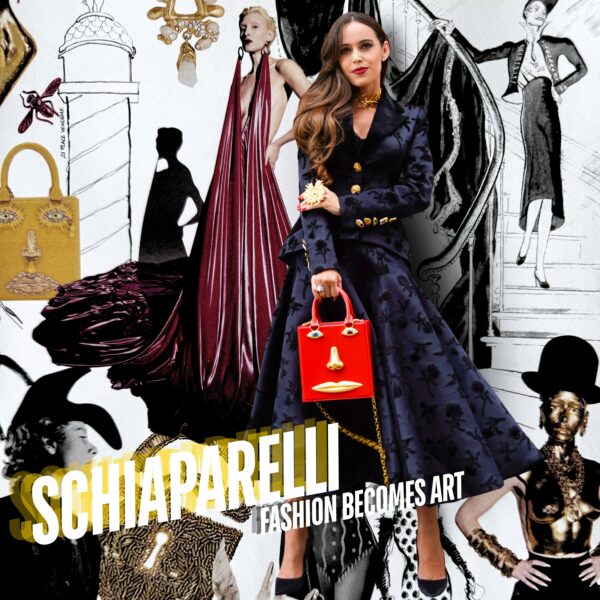
«Schiaparelli: Fashion Becomes Art» – an exhibition that sets out to explore the rare moment when clothing transcends function and becomes pure expression – opened at the Victoria and Albert Museum with a quiet sense of occasion that felt entirely fitting.
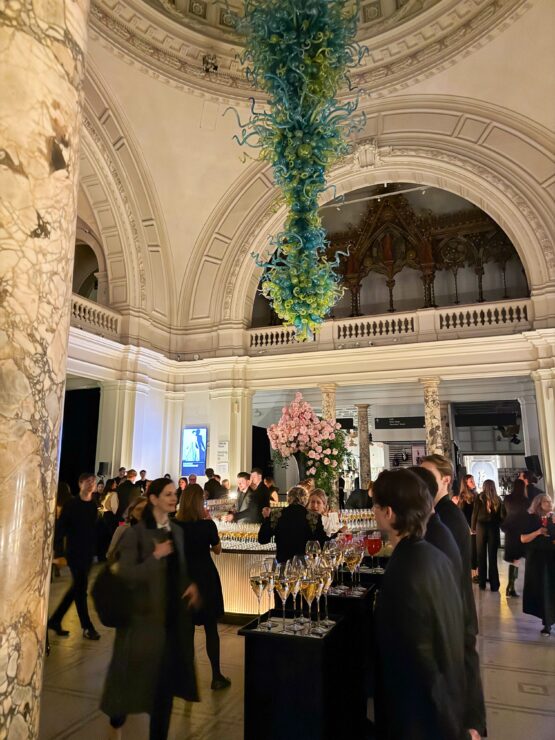
The evening began, as such evenings should, with a sense of anticipation. London suspended between history and spectacle, the museum preparing to open its doors to a world that has always lived slightly beyond the real.
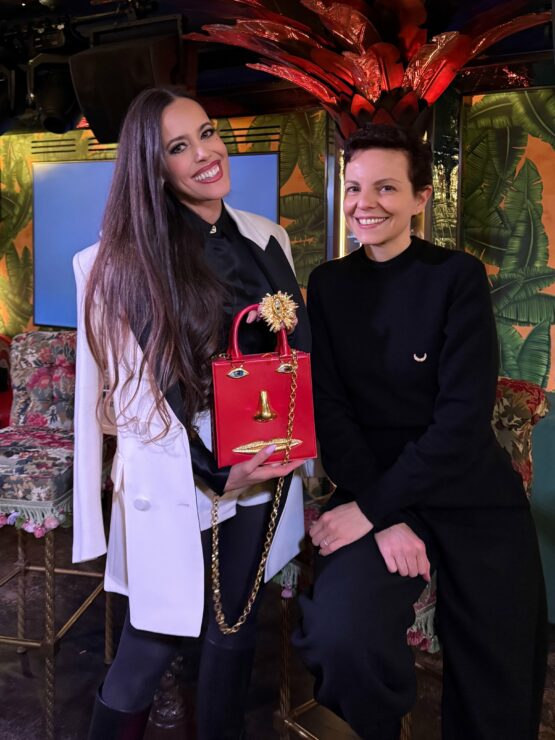
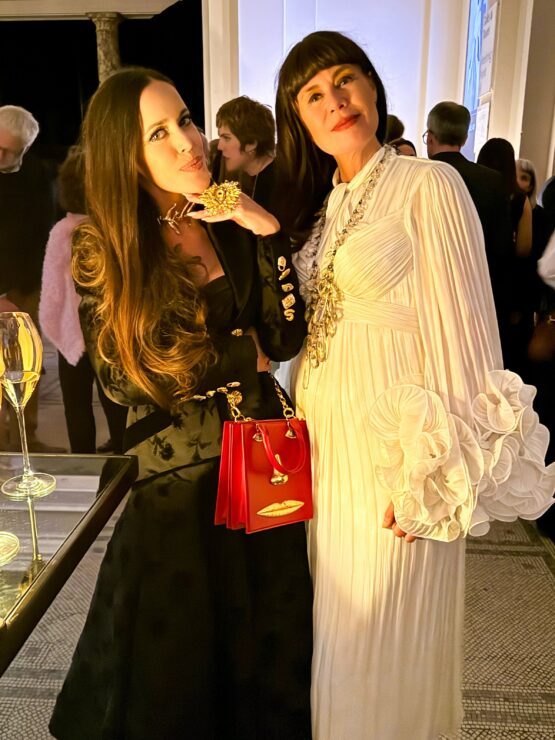 With my dear friend Pernilla Bennet of House of Bennet at the opening.
I had flown in for the occasion, drawn not only by the promise of the exhibition but by something more personal, a long-standing admiration for Elsa Schiaparelli and the singular universe she created. Dressing for the night felt less like choosing an outfit and more like stepping into a dialogue with her legacy.
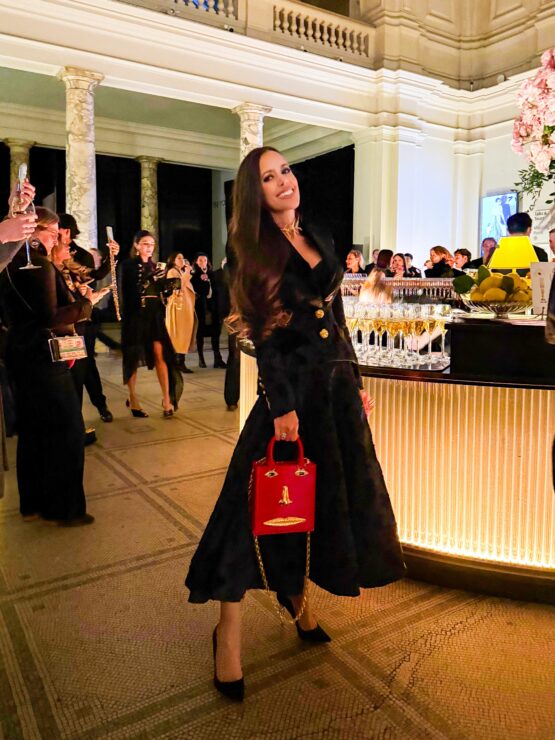
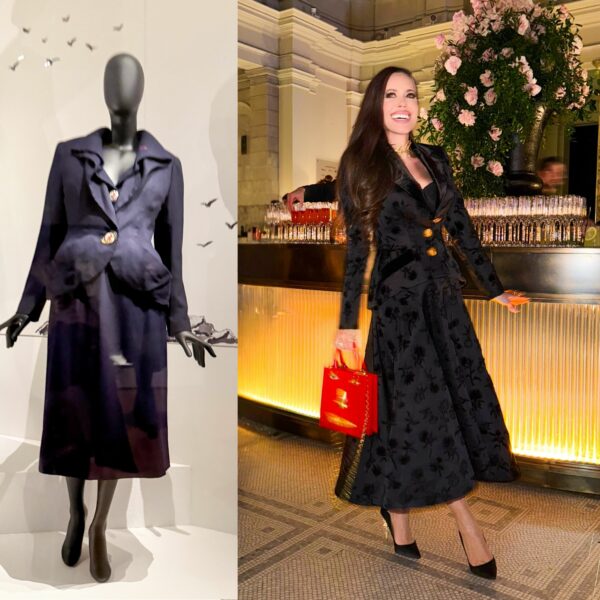
I wore Schiaparelli, of course, an ensemble rich in detail, anchored by those unmistakable buttons that are never merely functional but small sculptures in their own right. There is something transformative about wearing Schiaparelli: you don’t simply dress, you participate.
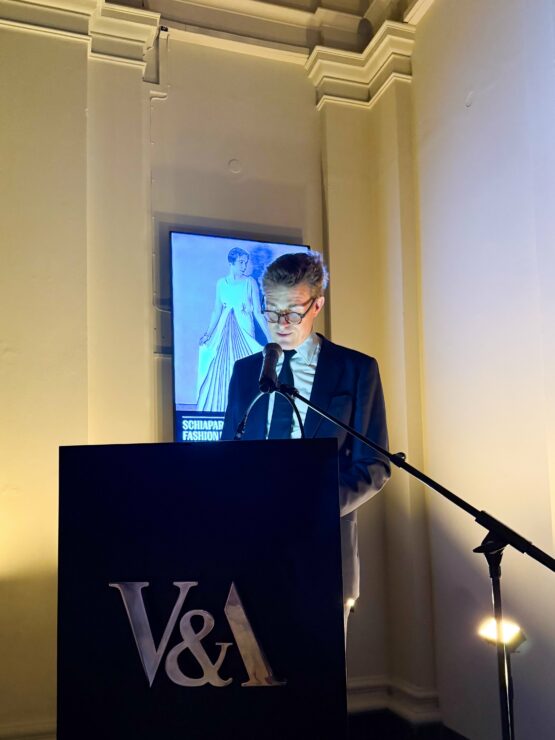 Beautiful opening speech by Tristram Hunt, Director of the Victoria and Albert Museum.
 With actress and singer Minnie Driver at the opening reception.
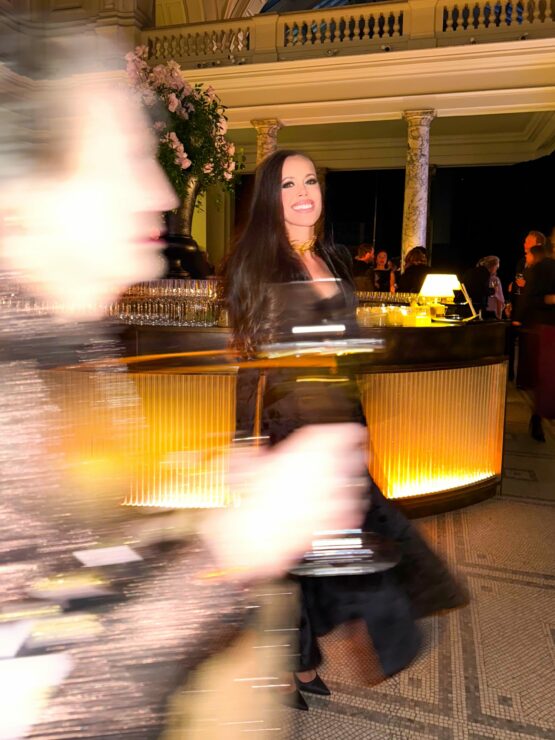 Almost as if the spirit of Elsa Schiaparelli was still quietly moving through the room.
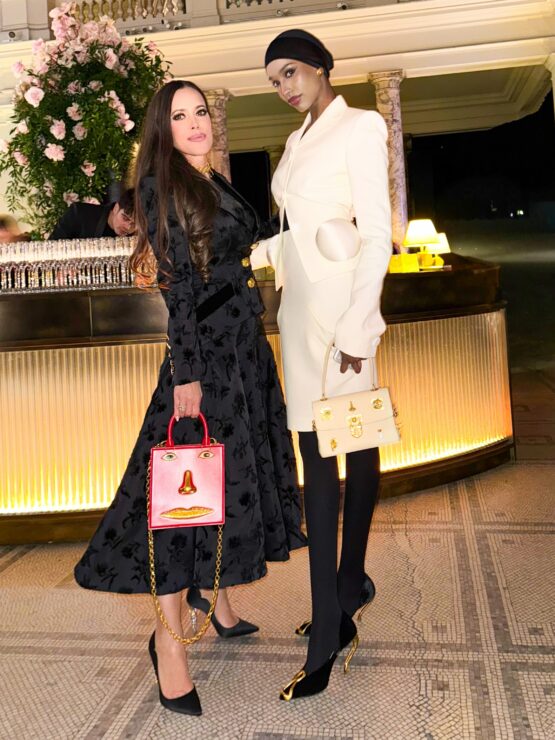 With one of the UK’s first hijab-wearing models, Ikram Abdi Omar, both in Schiaparelli.
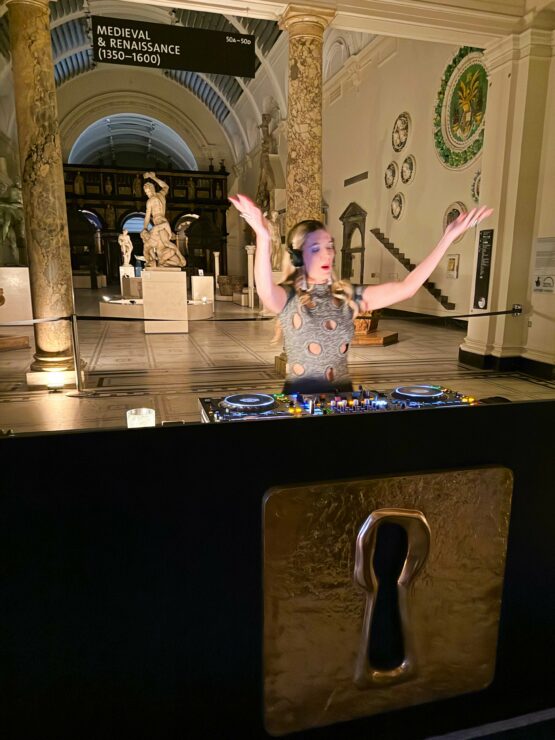
The Opening: A Living Surrealist Moment
The reception unfolded with a kind of cinematic elegance. Guests moved through the museum like characters in a dream Elsa herself might have approved of, where fashion, art, and personality dissolve into one another. It felt fitting, because Schiaparelli never believed in boundaries.
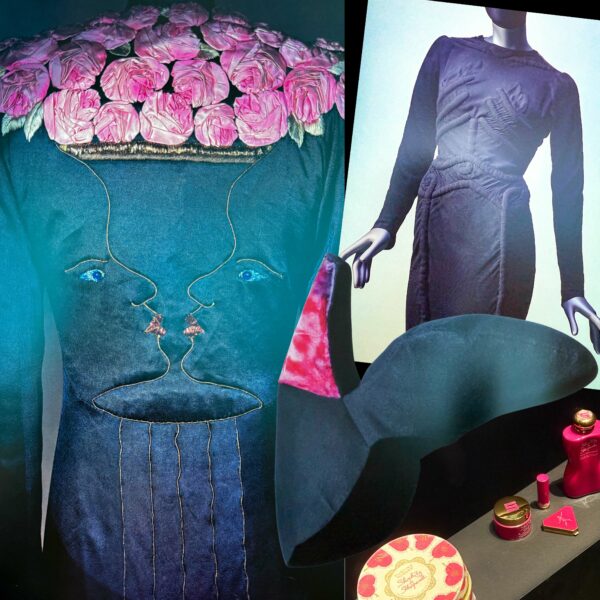
Elsa was not simply a designer; she was an instigator of ideas. She introduced shocking pink as a cultural statement, elevated the ordinary into the extraordinary, and treated garments as canvases for wit and subversion. Her fascination with the surreal, lobster dresses, skeleton gowns, tears rendered in silk, was never decorative. It was a way of seeing.
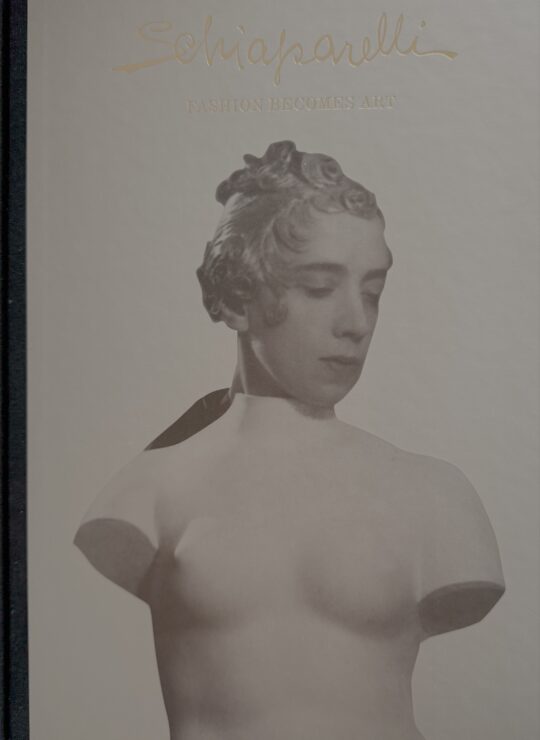
She brought so many extraordinary ideas into fashion. Her eye for surrealism, her collaborations with artists like Salvador Dalí and Jean Cocteau, her instinct for symbolism and illusion, and her fascination with remarkable details, especially her extraordinary buttons, helped redefine what couture could be.
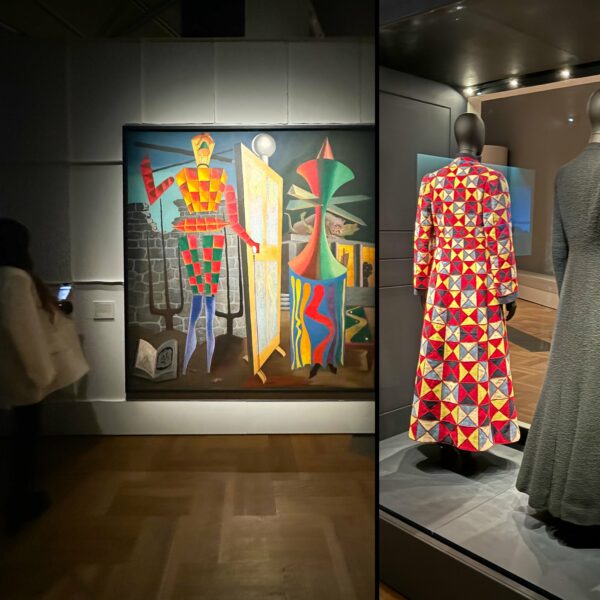 On display is the Schiaparelli Harlequin Coat from the S/S 1939 Haute Couture collection entitled «Commedia dell’ Arte» inspired from Man Ray’s 1939 painting entitled «Les Beaux Temps».
Elsa did not merely create beauty; she created conversation. Her work had humor, elegance, and often an intentional sense of disturbance. That was part of her brilliance. She understood that fashion becomes unforgettable when it surprises the eye and unsettles expectation just enough to make people look again.
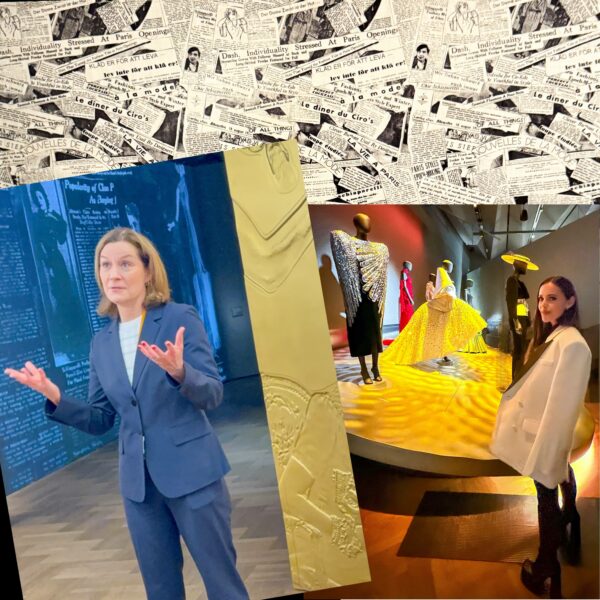
A Morning with the Past and Present
The following morning offered something rarer: stillness, and the privilege of understanding.
I was guided through the exhibition by Sonnet Stanfill, Senior Curator of Fashion at the Victoria and Albert Museum (V&A), whose clarity and sensitivity brought the entire curation into focus. It was a deeply impressive experience and one that stayed with me on a very personal level.
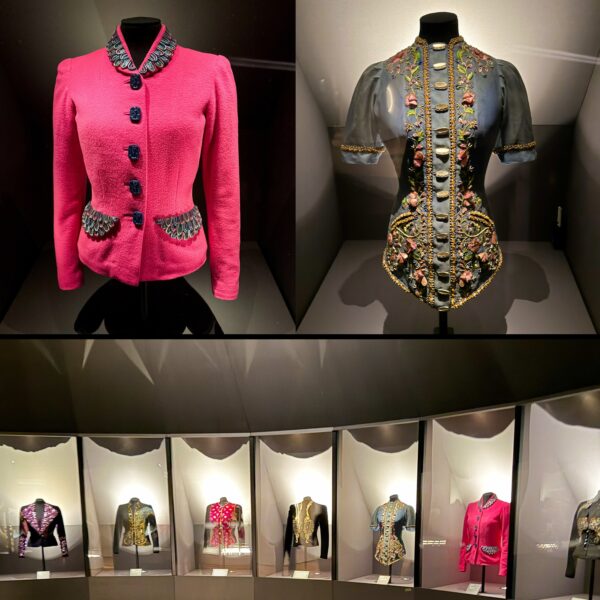 One room is dedicated to Elsa Schiaparelli’s amazing jackets with incredible details.
What makes this exhibition remarkable is its rhythm. Rather than isolating history, it stages a conversation, one room dedicated to Elsa’s original creations, the next to the contemporary vision of Daniel Roseberry.
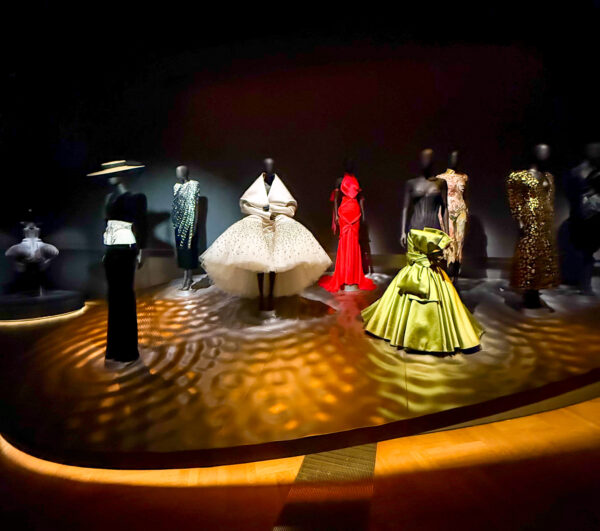 Daniel Roseberry’s dreamy designs.
This alternation is more than curatorial, it is philosophical. It allows you to see, almost viscerally, how a house survives time without becoming static.
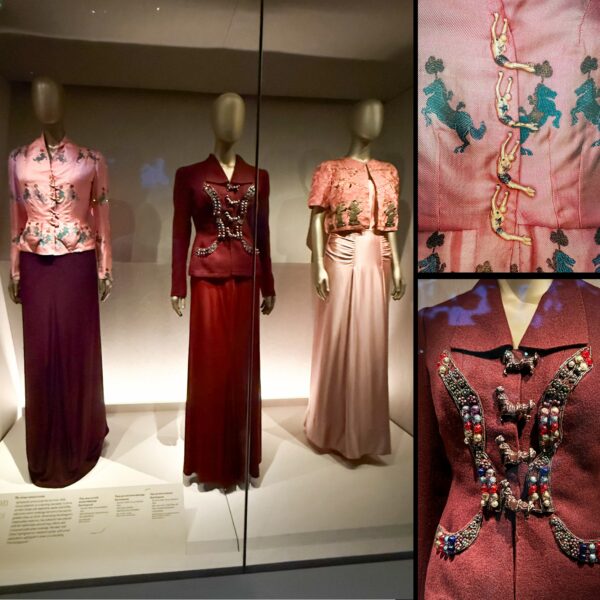 Three rare pieces from Elsa Schiaparelli’s iconic 1938 Circus Collection.
 From Elsa to Daniel Roseberry – a legacy reimagined, the inspiration found within the exhibition itself.
Elsa’s pieces remain astonishing: technically daring, intellectually mischievous, and deeply emotional. But what I just love as much is how seamlessly Roseberry’s work stands beside them. He has achieved something exceedingly rare. His designs do not imitate; they translate. The codes, bold symbolism, sculptural silhouettes, that slightly disquieting elegance, remain intact, yet they are sharpened for a contemporary eye.
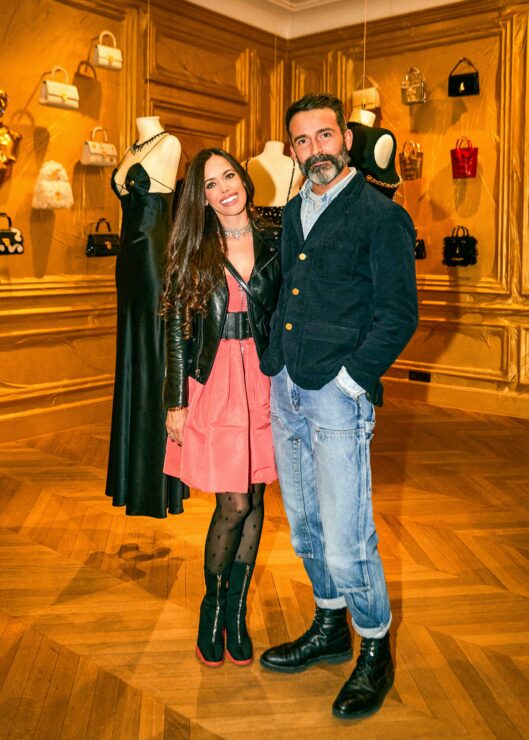 Daniel Roseberry with me
For me, he is one of the most compelling designers working today. There is precision in his work, but also courage. He understands that Schiaparelli must provoke, not just please.
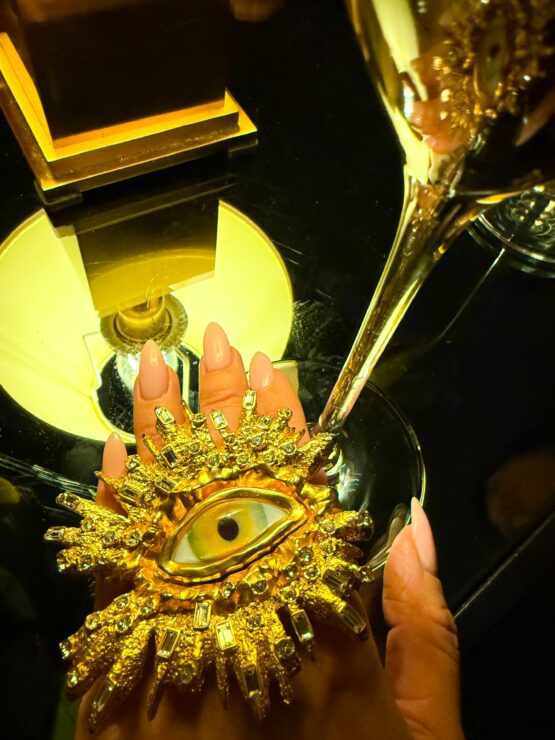
Walking through the exhibition, I felt something unexpectedly personal: a renewed conviction in the beauty of collecting fashion. To preserve, to curate, to believe that garments carry memory and meaning. And, quietly, the thought emerged, perhaps one day, my own collection Sandra’s Closet will live in a space like this.
Conversations at Annabel’s
From the museum, I hurried to Annabel’s, where another layer of the story unfolded in conversation.
On stage, Daniel Slater, Director of Exhibitions at the V&A, spoke alongside Francesco Pastore, Head of Heritage and Culture at Schiaparelli, about the making of the exhibition. What appears effortless to the visitor is, in truth, the result of years, seven, as it turns out, of discussion, negotiation, research, and patience. To gather these pieces, to shape them into a coherent narrative, required not only expertise but devotion.
Toward the end, Delphine Bellini, CEO of Schiaparelli, joined the discussion, and I found myself asking a question that had lingered with me: why choose Daniel Roseberry, at the time a relatively unknown name outside industry circles, despite his important work with Thom Browne?
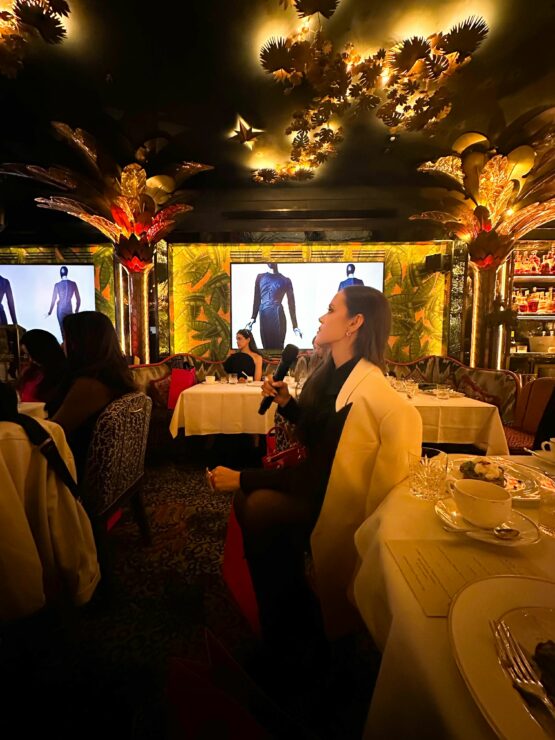
Her answer was as precise as it was revealing. Roseberry had submitted a portfolio so extraordinary, so clear in its vision, that the decision became inevitable. What he offered was not just skill, but perspective: an ability to bridge heritage and modernity through what she described, beautifully, as a «quite disturbing view.»
It is exactly that tension, between beauty and unease, elegance and provocation, that defines Schiaparelli at its best.
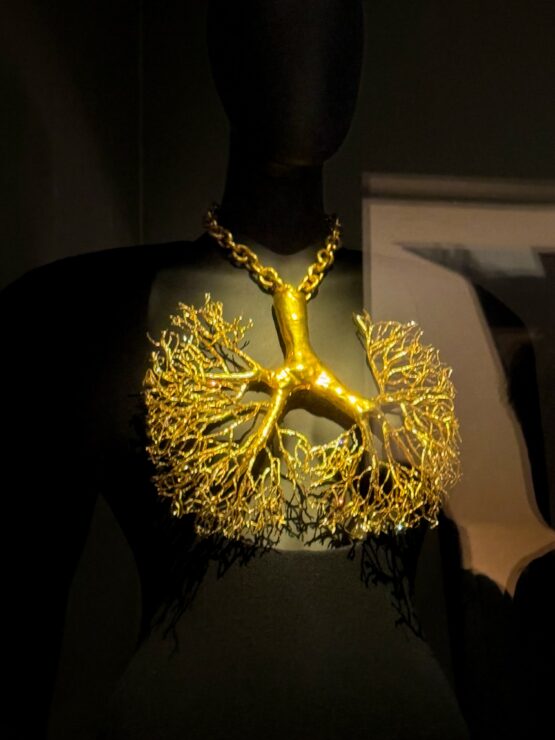
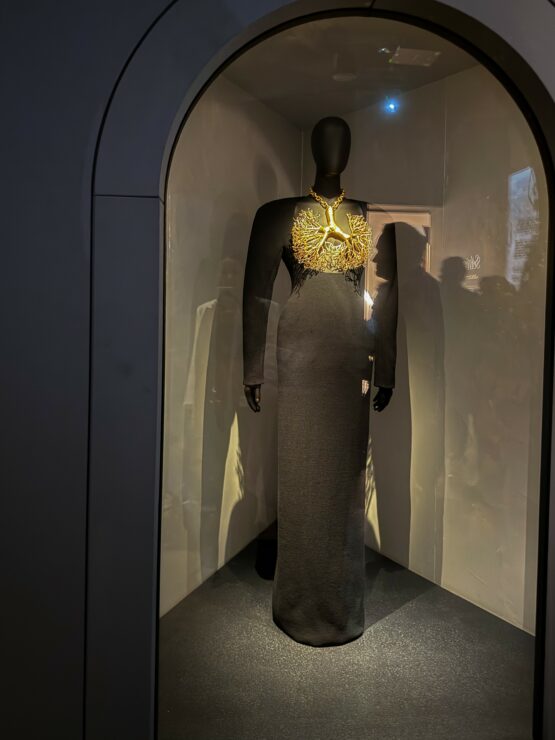 Daniel Roseberry’s now-iconic look worn by Gigi Hadid in Cannes with its sculptural lung necklace born from an unexpected production accident, turned into one of Schiaparelli’s most striking modern signatures.
A House That Refuses to Sleep
What this exhibition ultimately makes clear is that Schiaparelli is not a house anchored in nostalgia. It is alive, restless, intelligent, and unwilling to settle.
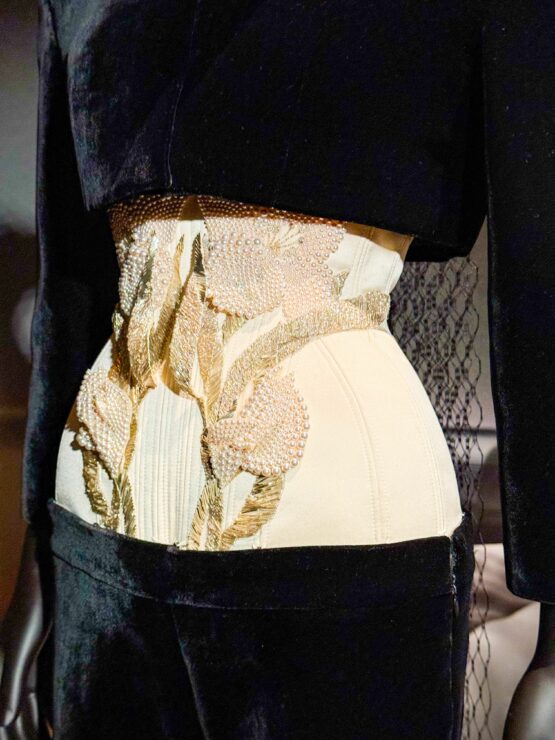
Elsa once stood at the intersection of fashion and art, reshaping both. Today, under Daniel Roseberry, that spirit continues, not as imitation, but as evolution.
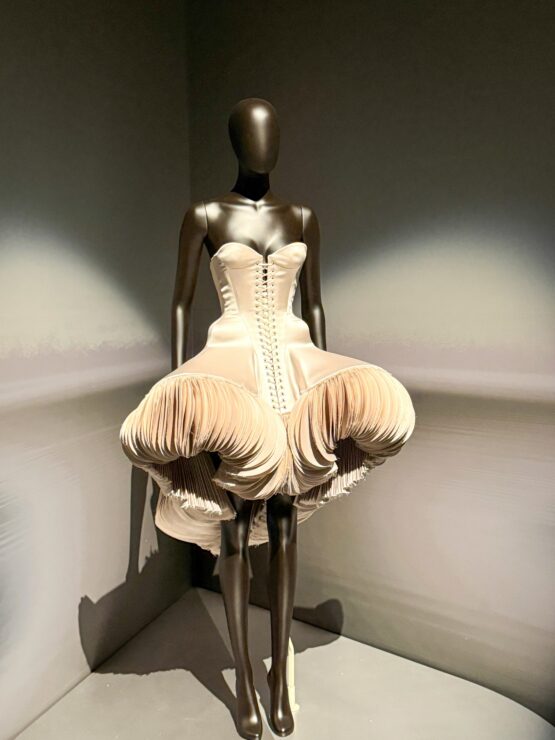
And as I left, still carrying the echo of the night before and the clarity of the morning after, one thought remained: some maisons dress the body, others shape identity. Schiaparelli does something rarer, it changes the way you see.
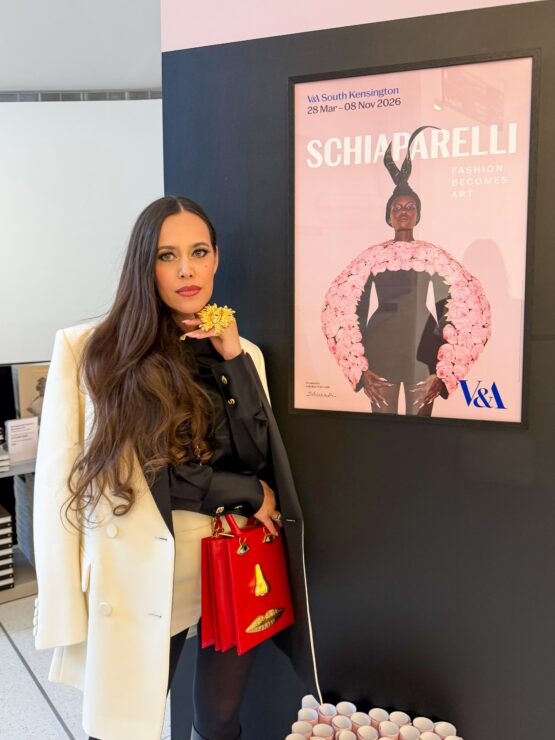
And that, perhaps, is the real triumph of «Schiaparelli: Fashion Becomes Art»: it shows that the most powerful fashion does not simply dress the body. It leaves a mark on the mind.
Schiaparelli: Fashion Becomes Art runs until 8 November 2026 at V&A South Kensington.
LoL, Sandra
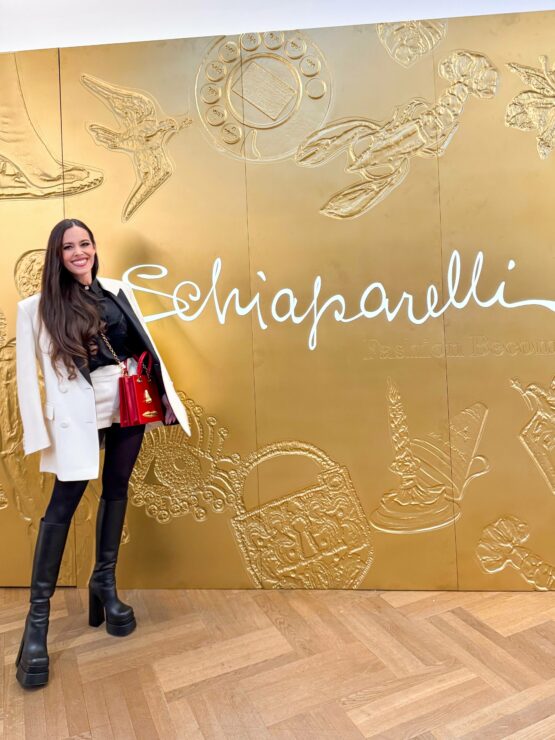
Photos: © Sandra Bauknecht
DISCLOSURE: We may earn commission from links on this page, but I only recommend products I love. Promise.






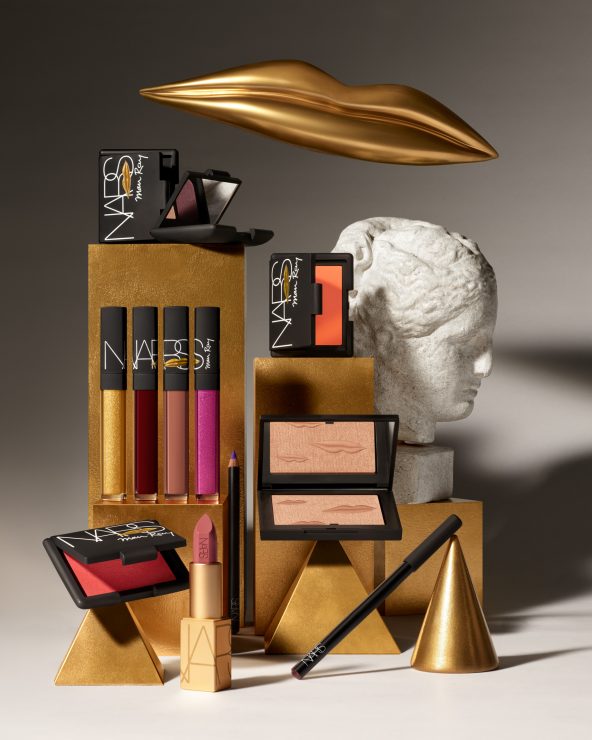
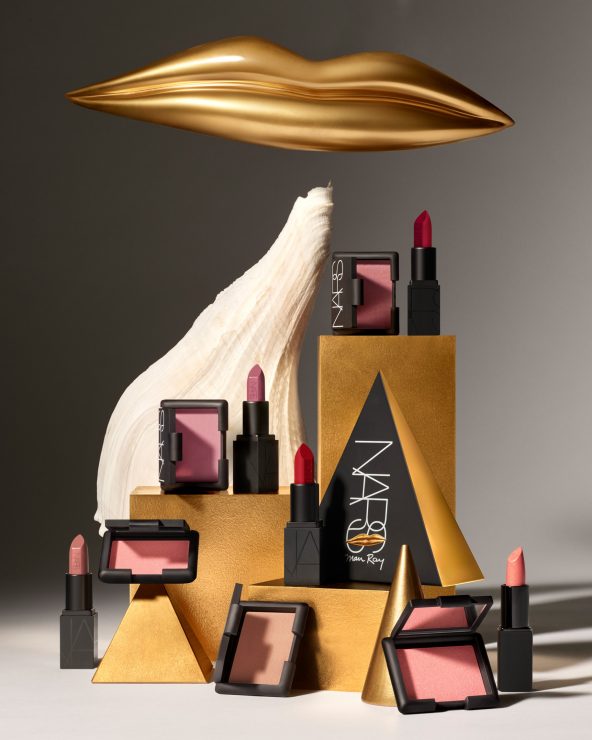
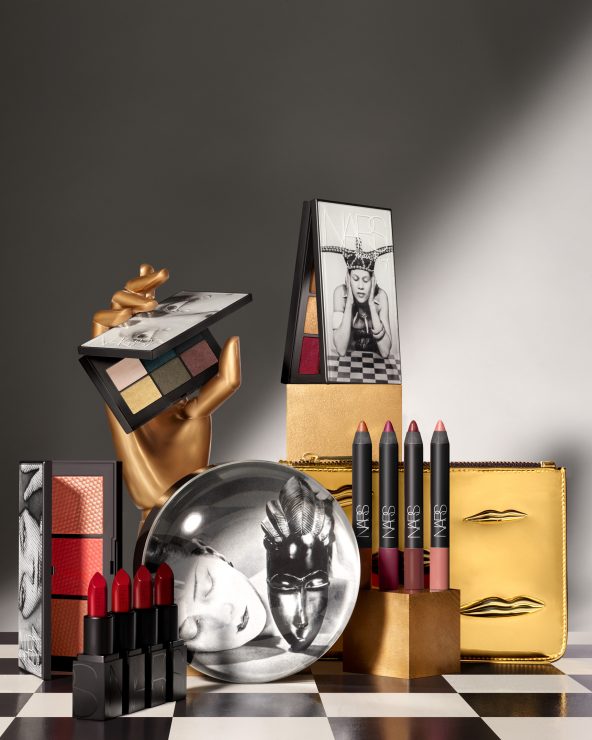
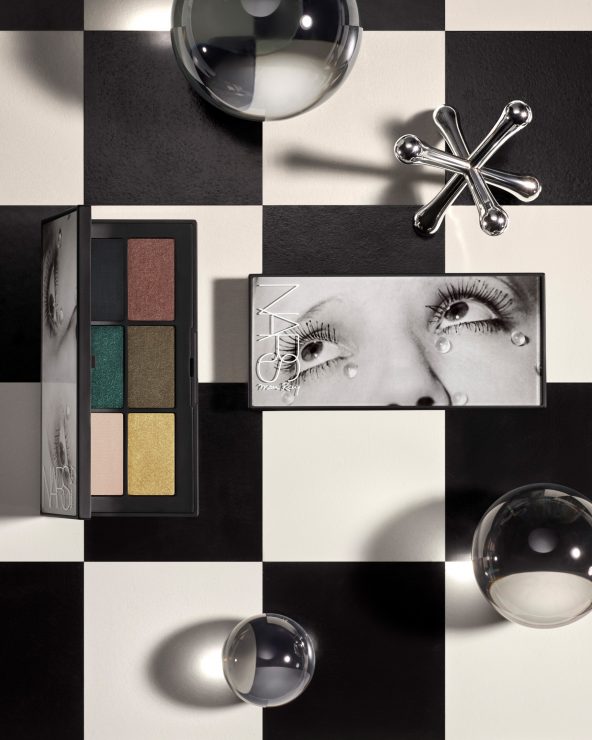
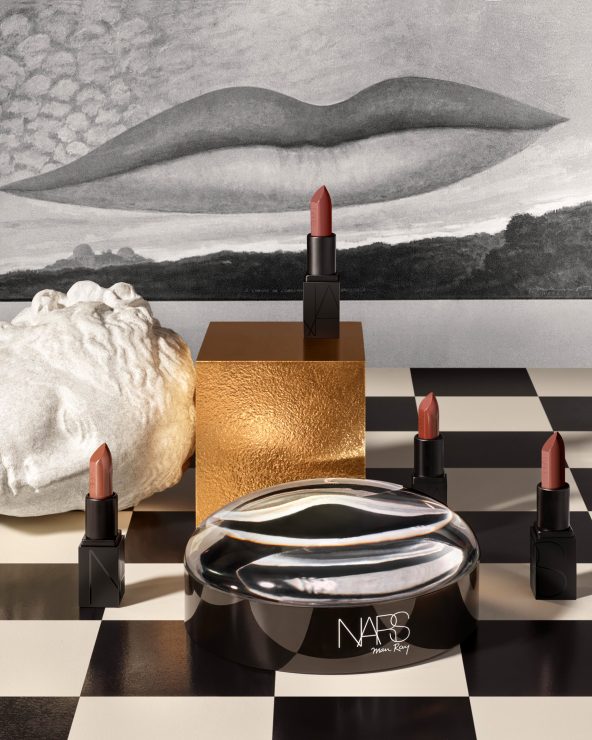
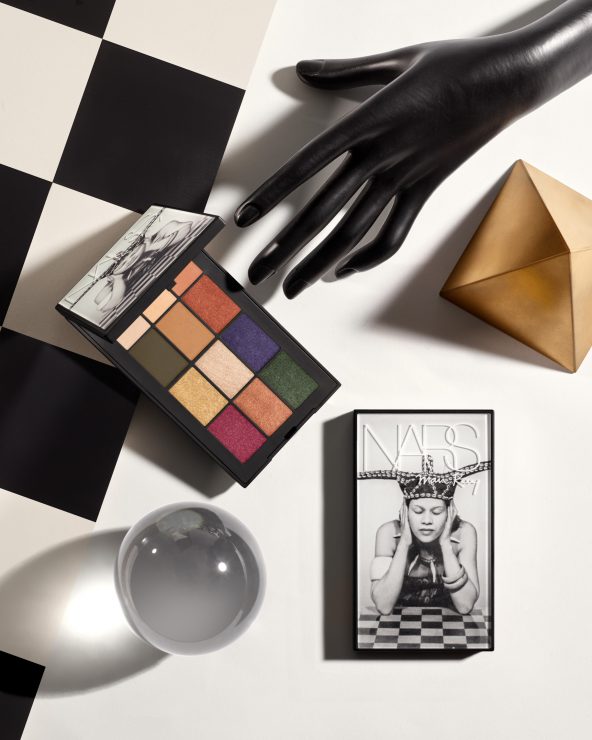
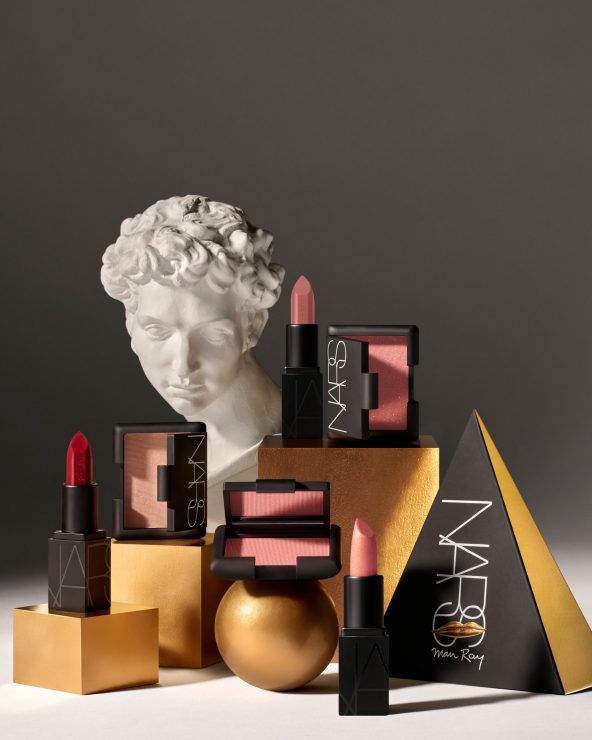
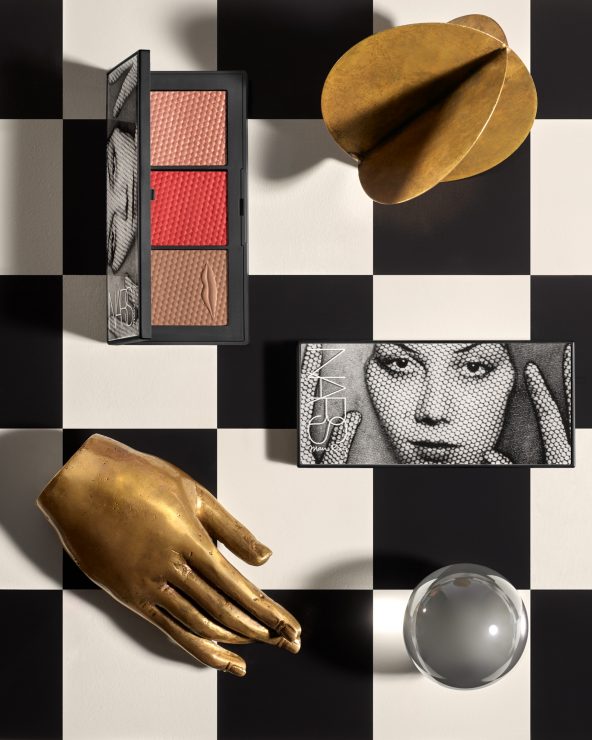
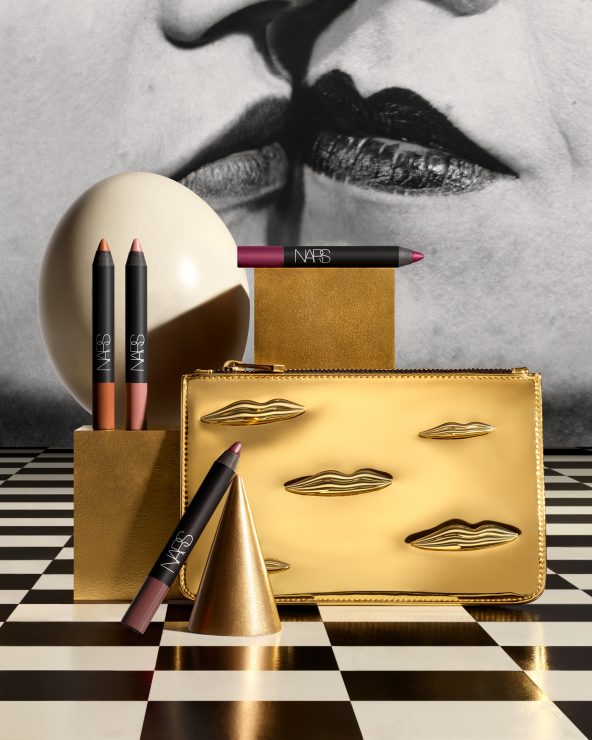
 My personal favorites: Duo Eyeshadow in «Montparnasse» (shimmering gold / iridescent orchid), Love Triangle mini gift set featuring the famous «Orgasm» shade in a Mini Blush and Lipstick and Overexposed Glow Highlighter in «Double Take».