
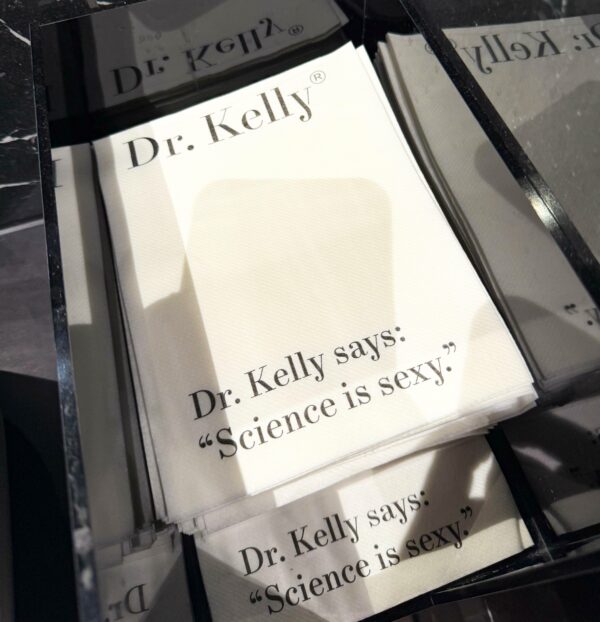
Science is sexy and so is knowledge!
You asked, Dr. Kelly® answered!
I’m so happy to finally share my interview with the wonderful Dr. Kelly®. After our lovely lunch together, I invited you to send in your questions, and she took the time to answer them.
What I particularly love about her approach is the combination of science, expertise and a genuine understanding of women. Because beauty should never be about chasing perfection, but about feeling confident in your own skin.
And as Dr. Kelly® likes to say: «Science is sexy!»
If you missed our event, make sure to check out my previous post for a little look behind the scenes. And now, enjoy the interview!
What would be your approach to treating fine lines and pigmentation in sensitive skin while protecting the skin barrier? Which treatments offer the best balance of visible, natural-looking results and long-term skin health?
Dr. Kelly: «My first rule with sensitive skin is simple: don’t fight it. Work with it. A compromised skin barrier is not the right starting point for aggressive rejuvenation. I would first focus on calming inflammation with red light therapy, restoring the barrier with biostimulators and establishing a skincare routine the skin actually tolerates. Once the skin is stable, we can address pigmentation and fine lines individually. Depending on the diagnosis, carefully selected superficial peels, gentle fractional laser treatments or other targeted technologies can be useful, like phototherapy.
But not every pigmentation problem should be treated with heat. Melasma, for example, can become worse after poorly selected energy-based treatments. Here we prefer Dermamelan peel. With reactive skin, I would be particularly cautious about aggressive combination protocols, deep peels and treatments that promise dramatic results with little regard for recovery. The goal is not to win a battle against your skin. It is to make your skin work better for you.»
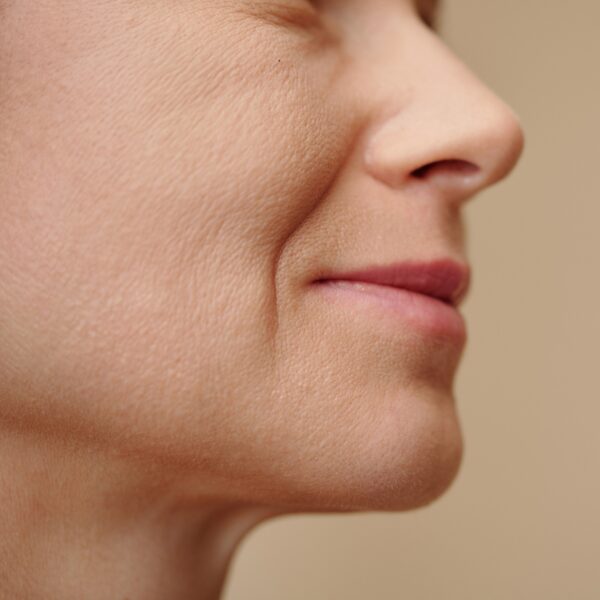
Is there an alternative to hyaluronic acid for nasolabial folds? I am not happy with mine, but I am not a fan of HA.
Dr. Kelly: «Absolutely. But before discussing alternatives, I would ask a different question: Why are the folds there?
Nasolabial folds can result from facial anatomy, volume changes on the middle face, tissue descent or a combination of these factors. Sometimes treating the surrounding facial structure like middle and lateral face makes more sense than injecting directly into the fold. Biostimulators may help selected patients with tissue quality or volume support, but they do not simply erase a deep fold. And when significant tissue descent is responsible, surgery may be the more logical solution. I would also be cautious about using permanent or difficult-to-reverse fillers simply because someone dislikes hyaluronic acid. You don’t necessarily need to fill a fold to improve it. And not every fold needs to disappear.»
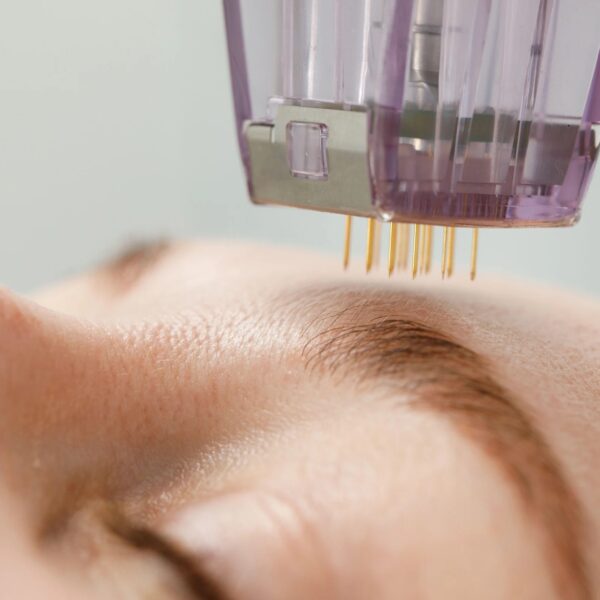
Does microneedling really work on fine lines? Do you need ten sessions, or would you recommend lasers instead?
Dr. Kelly: «Yes, microneedling works — provided we have realistic expectations. It stimulates a controlled wound-healing response and can improve skin texture and fine lines. But it is not a facelift in disguise. For subtle improvements and minimal downtime, conventional microneedling can be a reasonable choice. Usually, a series of treatments is more useful than one session, but ten sessions should certainly not be presented as a universal requirement. For more visible wrinkles or sun-damaged skin, fractional lasers can produce stronger results, depending on the patient’s skin type and tolerance for downtime. My preference is to choose the technology according to the problem, rather than create a treatment plan around a machine. Ten sessions of the wrong treatment will not become the right treatment.»
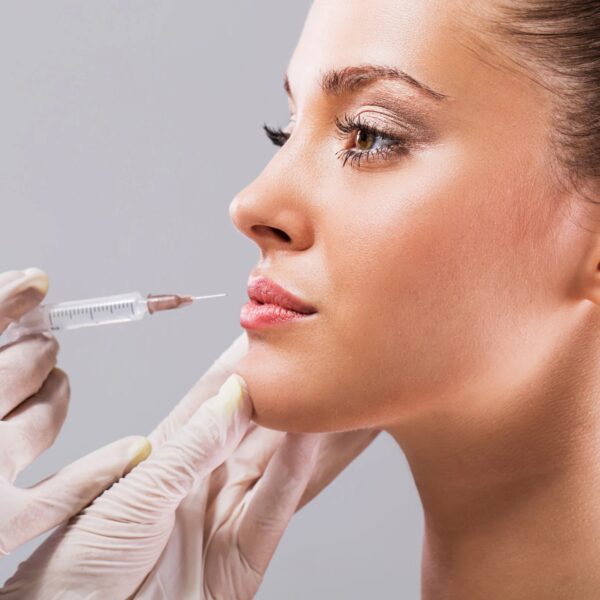
There is a trend towards preventive Botox and fillers in your twenties. Does starting early really help, or can it backfire later?
Dr. Kelly: «I have nothing against treating a woman in her twenties when there is a genuine indication. But I have a problem with the idea that every young woman should start injecting her face before she has even begun to age. Botulinum toxin can soften dynamic expression lines and may help prevent certain lines from becoming more deeply established. But that does not mean everybody needs it at 25.
And fillers are a different discussion altogether. They replace or enhance volume; they are not a general prevention strategy. Repeated unnecessary injections can create unwanted fullness, altered proportions and other complications.
Prevention does not mean doing as much as possible as early as possible. It means doing as little as necessary at the right time. At 25, your best investment may still be sunscreen, good skincare and some basic hydration like skinboosters or mesotherapy.»
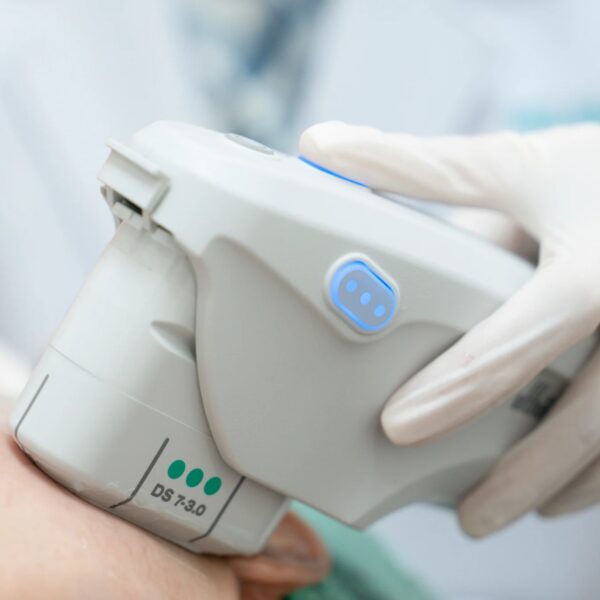
I have very thin skin with little subcutaneous fat. Are heat-based treatments such as Morpheus8, Ultherapy and XERF a poor choice for my skin type?
Dr. Kelly: «Radiofrequency and ultrasound devices are not identical, and their effects depend on depth, settings, technique and the anatomy being treated. Some protocols can affect subcutaneous fat, which may be particularly undesirable in an already lean face. An example here is Ulterapy, that can affect subcutaneous fat, this is why I never introduced it in my clinic. And once facial volume is lost, restoring it is not always straightforward. I am not against energy-based treatments. I am against using them indiscriminately.
For a thin face, I would often prioritise skin quality improvement with biostimulators like Radiesse and Polynucleotides and carefully selected superficial treatments rather than aggressive tightening. Morpheus and XERF are device names that are used for marketing reasons, in my experience all radio frequency device results are only dependent on physician’s experience to set the right settings.»
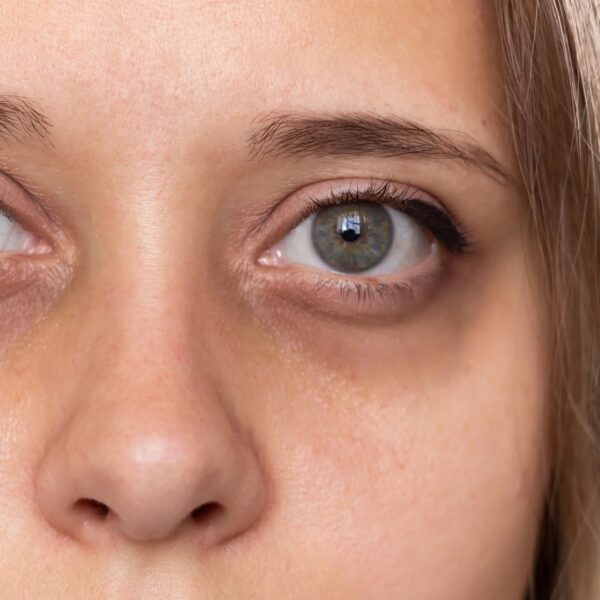
What is the most effective way to treat fine lines under the eyes? I had lumps and recurring swelling after filler, and Botox seems counterproductive for lymphatic drainage.
Dr. Kelly: «The under-eye area is one of the places where I believe restraint is particularly important. The skin is thin, the anatomy is complex and even a small amount of product can become visible. If someone has experienced prolonged swelling after tear-trough filler, I would first assess whether residual filler, fluid retention or another problem is contributing. Hyaluronic acid can sometimes persist much longer than expected.
For fine lines, carefully selected fractional laser resurfacing or light chemical peel with PRF and exosomes (we have two signature treatment shere called CellFusion Therapy and Brightness Duo) may be more appropriate than adding volume. There are Polynuclotides specially made for the eye area although results vary and the evidence for some newer injectables remains limited.
Botulinum toxin can be useful for certain lateral expression lines, but placement and dose matter. Poorly selected injections around the lower eyelid can indeed worsen puffiness or affect eyelid function. Although I do it for myself and works pretty well, I must say. And if the real problem is excess skin or prominent lower-eyelid fat, surgery (lower blepharoplasty) may be the better answer. The eye area does not forgive overtreatment. Sometimes the smartest treatment is the one we decide not to inject.»
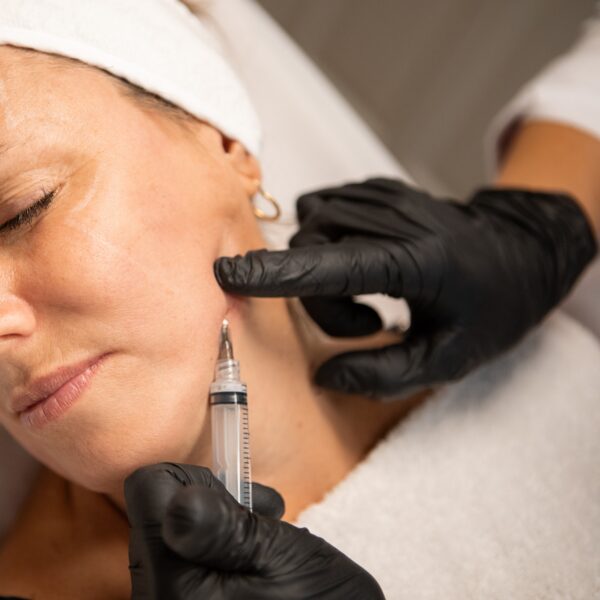
Where do you stand on biostimulators, and which ones do you consider the most effective?
Dr. Kelly: «I find biostimulators very interesting because they represent a different approach to aesthetic medicine.
Instead of simply placing volume into the face, we encourage the tissue to produce some of its own structural support.
Two established examples are calcium hydroxylapatite, such as Radiesse, and poly-L-lactic acid, such as Sculptra, Julaine and Lanluma. They work differently, and I would not declare one universally better than the other. I usually start with Radiesse as it is longer in the market and has proves results. It can provide structural support and, depending on how it is used, stimulate collagen production. Sculptra and Julaine works more gradually and is particularly interesting for selected patients who need broader volume restoration. But biostimulators are not risk-free, and they are not easily reversible. Correct placement and patient selection are essential.
I love the idea of stimulating the skin to do more for itself. But stimulation is not a substitute for good judgement.»
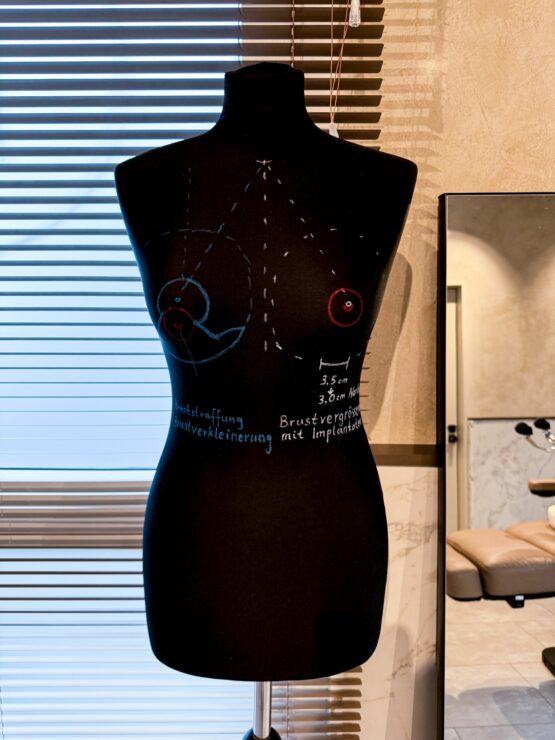
Is it true that modern breast implants can stay in for a lifetime, or do they still have to be exchanged?
Dr. Kelly: «Modern implants are sophisticated medical devices, and many women can keep them for a very long time. But no surgeon can promise that an implant will last forever. The good news is that implants do not automatically need to be replaced after ten years like in the past. If the breasts look good, the patient has no problems and the implants are intact, there may be no reason to operate. According to producers promises, last generation of implants are considered lifetime devices. Rupture, capsular contracture, changes in the breast tissue or simply a change in personal preference may eventually make another operation necessary.»

There is a device that tightens the skin during liposuction. Can it also be used on its own, without fat removal, simply to firm the body?
Dr. Kelly: «Yes, we work with skin tightening using plasma and radio frequency energy (that is the surgery I got last Thursday on my upper arms, belly, double chin and inner thighs) I can be used alongside liposuction but can also be applied without removing fat. But indeed it works more as a supportive skin tightening, improving mild skin laxity and not as a lift surgery removing significant excess skin. For. Its skin laxity I find it though a wonderful alternative to invasive surgery as scarring is almost invisible and downtime very low. It cannot be used as an alternative though when a lot of skin needs to be lifted or removed.»
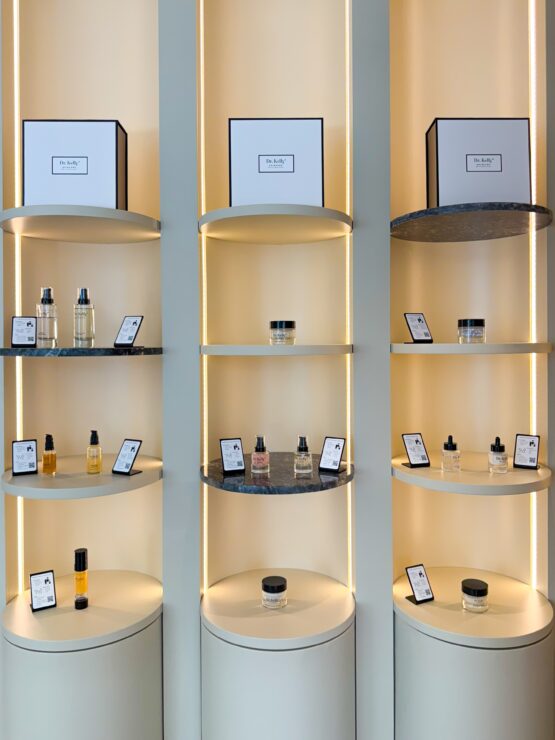
What is your absolute daily beauty regimen? And honestly, can you overdo skincare?
Dr. Kelly: «Absolutely. And I think many women do! We have reached a point where some bathroom shelves look more complicated than an operating theatre. My essentials are surprisingly simple.
In the morning: gentle cleansing if needed, a tonic with acid that does daily a mild resurfacing, an AHA serum that closes the pores if I intend to do makeup. If not or a hydrating hyaluronic serum and broad-spectrum SPF 50.
In the evening: proper cleansing, followed again by my AHA tonic lotion, a well-formulated serum with targeted active ingredients and barrier-supporting moisturisation.
Retinoids can be excellent for appropriate skin types, but they need to be introduced gradually.And because I do a lot of chemical peel on my faec I avoid them. What I would avoid is combining too many strong actives simply because each one sounds beneficial. More products do not automatically mean better skin. Sometimes they mean irritation, inflammation and a damaged barrier. Good skincare should make your skin stronger, not your bathroom shelf longer.»

Where does hybrid breast augmentation genuinely outperform classic augmentation, and where are its limits?
Dr. Kelly: «I like hybrid augmentation because it allows us to combine two different strengths. The implant provides predictable volume and shape. The patient’s own fat allows us to refine contours, soften transitions and correct selected asymmetries. This can be especially valuable in slim women, where implant edges may otherwise be more noticeable.
But the technique has limitations. We need enough donor fat, not all transferred fat survives. Fat transfer also adds another surgical component and more cost. So I would never tell every woman that hybrid augmentation is automatically better. The best breast augmentation is not the one with the most techniques. It is the one that gives the right result for that particular woman.»
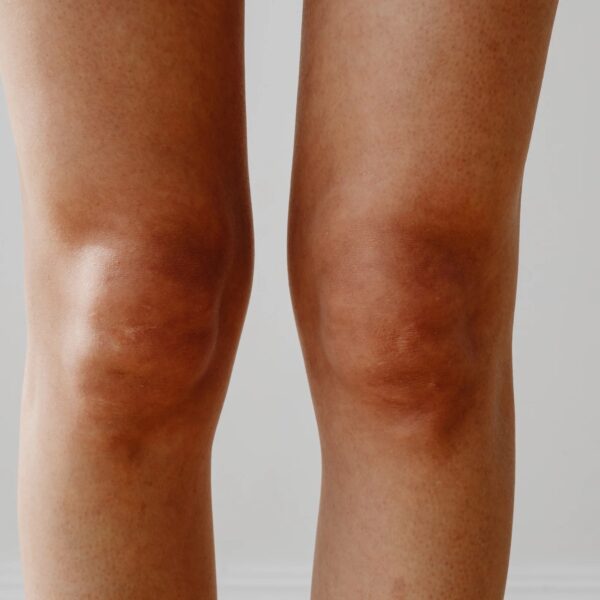
What is your top tip for firming the knee area? Nothing seems to work here.
Dr. Kelly: «First of all, you are not imagining it. The knees are genuinely difficult! The skin is relatively thin, constantly moving and exposed to changes in collagen, elasticity and underlying tissue. My first question would be whether we are dealing with fine crepey skin, localised fat or actual excess skin.
For mild skin laxity, selected radiofrequency or other collagen-stimulating treatments like Radiuses may provide some improvement. For skin quality, certain injectable like Lanluma or regenerative approaches like fractional laser have been considered, and used although the results vary. If there is localised fat, carefully planned liposuction can sometimes improve the contour, but it may worsen laxity if the skin cannot retract adequately. Here definitely plasma liposuction and not only liposuction.»
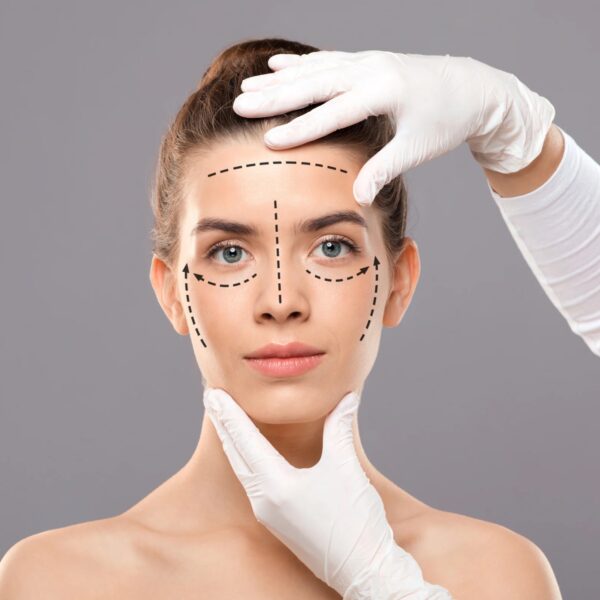
Is a facelift honestly the best option in the end? And is it true that the less you have done beforehand, the better the result?
Dr. Kelly: «If the main problem is significant descent of facial tissues, then yes, a well-performed facelift can be the most effective and most natural-looking solution. And that is something I think we should say more openly. For years, the industry has promoted the idea that avoiding surgery is always preferable. But repeated filler treatments cannot indefinitely compensate for tissue descent. However, I would not say that having had previous treatments automatically makes a facelift more difficult or less successful. It depends on what was done, how much product was used, where it was placed and whether there is scarring or altered tissue anatomy.
Excessive or poorly placed filler and some previous procedures can complicate surgical planning. But a patient who has had carefully performed Botox or appropriate skin treatments is not automatically disadvantaged. On the contrary performing a facelift on a skin that was prepared for years through the right treatments that made a better skin quality can promise more long lasting facelift results. Less invasive does not always mean more natural. Sometimes the most natural result comes from correcting the actual anatomical problem.»
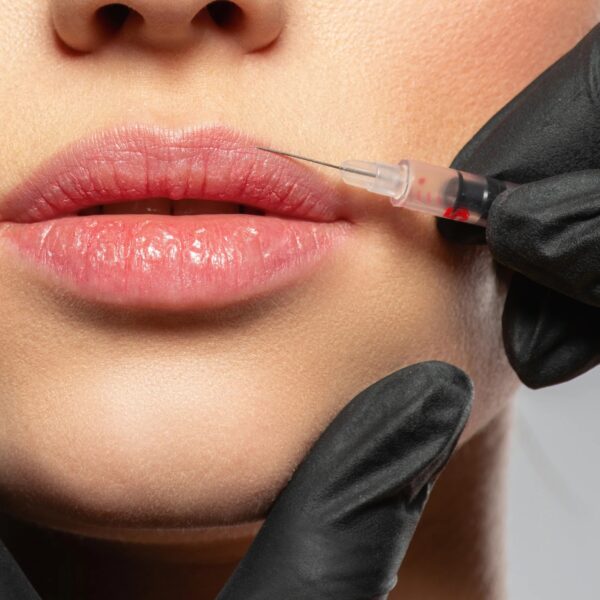
Which kind of lip filler actually looks natural? Is that even possible?
Dr. Kelly: «Of course it is possible. In fact, natural-looking lips should be the goal. But the secret is not a particular brand of filler. It is understanding the anatomy of the lips, their proportions, movement and relationship to the rest of the face. A beautiful lip treatment should look good when you smile and speak, not only in a perfectly posed photograph. For suitable patients, a carefully selected hyaluronic acid filler allows subtle adjustments. But product choice, injection technique and quantity are equally important. And sometimes the best decision is not to add more volume. I like for example using very light cross linked hyaluronic acid for the lips, the one that you would take for a superficial wrinkle for instance, which leave a natural movement of the lips and not the volumising ones.»

Have you ever refused to treat someone because you felt they did not need it? What happens in that moment?
Dr. Kelly: «Yes, absolutely. And more often than people might imagine. I remember that behind every request there is a person who has probably thought about that particular feature for a long time. So I would never dismiss the concern or tell someone that she is being silly. I listen, examine, and try to understand what she hopes the treatment will achieve. But if I believe the treatment would not improve her appearance, or could create more problems than benefits, I say so.
Sometimes I suggest another approach. Sometimes I recommend waiting. And sometimes I recommend doing nothing. Interestingly, many patients appreciate that honesty. I would rather lose a treatment than lose a patient’s trust. Our job is not to implement every aesthetic wish. It is to help patients make the right decisions.»

What exactly is the Kelly Lift? How is it different from normal filler treatments, and who is it for?
Dr. Kelly: «The Kelly Lift is my approach to non-surgical facial rejuvenation, based on treating the face as a whole rather than chasing individual wrinkles. I look at facial proportions, volume distribution, skin quality, anatomy and the way the face has aged. Then we develop an individual treatment plan using appropriate injectable techniques and products. The idea is place the products underneath the ligaments that lift the face like you do when you lift the SMAS or th muscle in a surgical facelift. So you support the facial structure where appropriate and maintain the patient’s individual features. It is particularly interesting for patients with early or moderate age-related changes who are suitable for non-surgical correction. But it is not a replacement for surgery when significant tissue descent is present.»
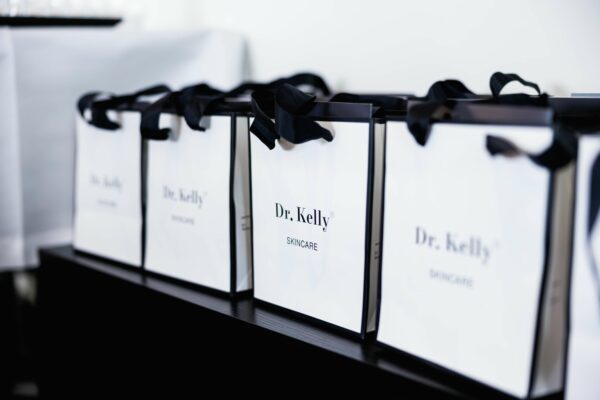
Your skincare line was apparently developed for skin after surgery. Why does that make it good for someone who has never had anything done?
Dr. Kelly: «Because the skin doesn’t need to undergo surgery to benefit from good barrier care and regeneration. The idea for my skincare line came from a very practical medical need. After surgery, I wanted products that could support my patients’ sensitive, stressed skin during recovery. That meant focusing on well-tolerated formulations, hydration, barrier support and ingredients selected to help soothe and care for the skin. But these principles are not exclusive to postoperative patients. Everyday life challenges our skin too: UV exposure, environmental stress, dry air, over-exfoliation and natural ageing. Of course, skincare for everyday use is not the same as treating a fresh surgical wound, and products must be suitable for the individual skin condition.
But the philosophy remains the same. Calm the skin. Protect the barrier. Support regeneration. My skincare was developed from the needs of the skin, not from a marketing trend.»

Is combining implants with your own fat really more natural than just implants, and is it worth the extra step?
Dr. Kelly: «This is where I would distinguish between a natural material and a natural result. Your own fat is natural tissue, of course. And when combined with an implant, it can create beautifully soft transitions and improve the overall contour. But a breast augmentation using only an implant can also look completely natural when the implant is correctly selected and positioned. Hybrid augmentation is especially useful when we want to camouflage visible implant edges, improve soft-tissue coverage or refine certain areas. However, it is not necessarily worth the additional surgery, cost and recovery for every patient. I would only recommend it when the fat transfer provides a meaningful advantage. Natural is not a technique. Natural is a result.»
Thank you, Dr. Kelly, for such a wonderful interview!
LoL, Sandra

Photos: © Sandra Bauknecht / Sanjeev Velmurugan
DISCLOSURE: We may earn commission from links on this page, but I only recommend products I love. Promise!